A World Beyond Words
International Literacy Day takes place on September 8. UNESCO established the day in 1966, and its 60th edition will be celebrated in 2026 under the theme Literacy for people, the planet and prosperity.¹
The need for attention remains urgent. According to UNESCO, approximately 739 million adults worldwide still lack basic reading and writing skills.²
Low literacy also remains a major concern in the Netherlands. Around three million adults between the ages of 16 and 75 have difficulty with reading, writing and/or numeracy.³ Yet literacy extends beyond these abilities. It also means being able to understand, evaluate and apply information, from a government letter to medical advice.²
Together with numeracy and digital skills, literacy plays an important role in people’s ability to navigate society independently. Recent research links early social media use to lower language performance.⁴ At the same time, the rise of AI is raising new questions about our reading, writing and critical-thinking skills. This makes the ability to evaluate information critically even more important.
A place to turn a new page
Libraries strengthen literacy not only through their collections, but also through guidance and programming.⁶ As accessible third places, they enable informal learning. Visitors can simply walk in, ask a question, or join a language café, read-aloud activity or digital workshop. In this way, people learn by doing and from one another.
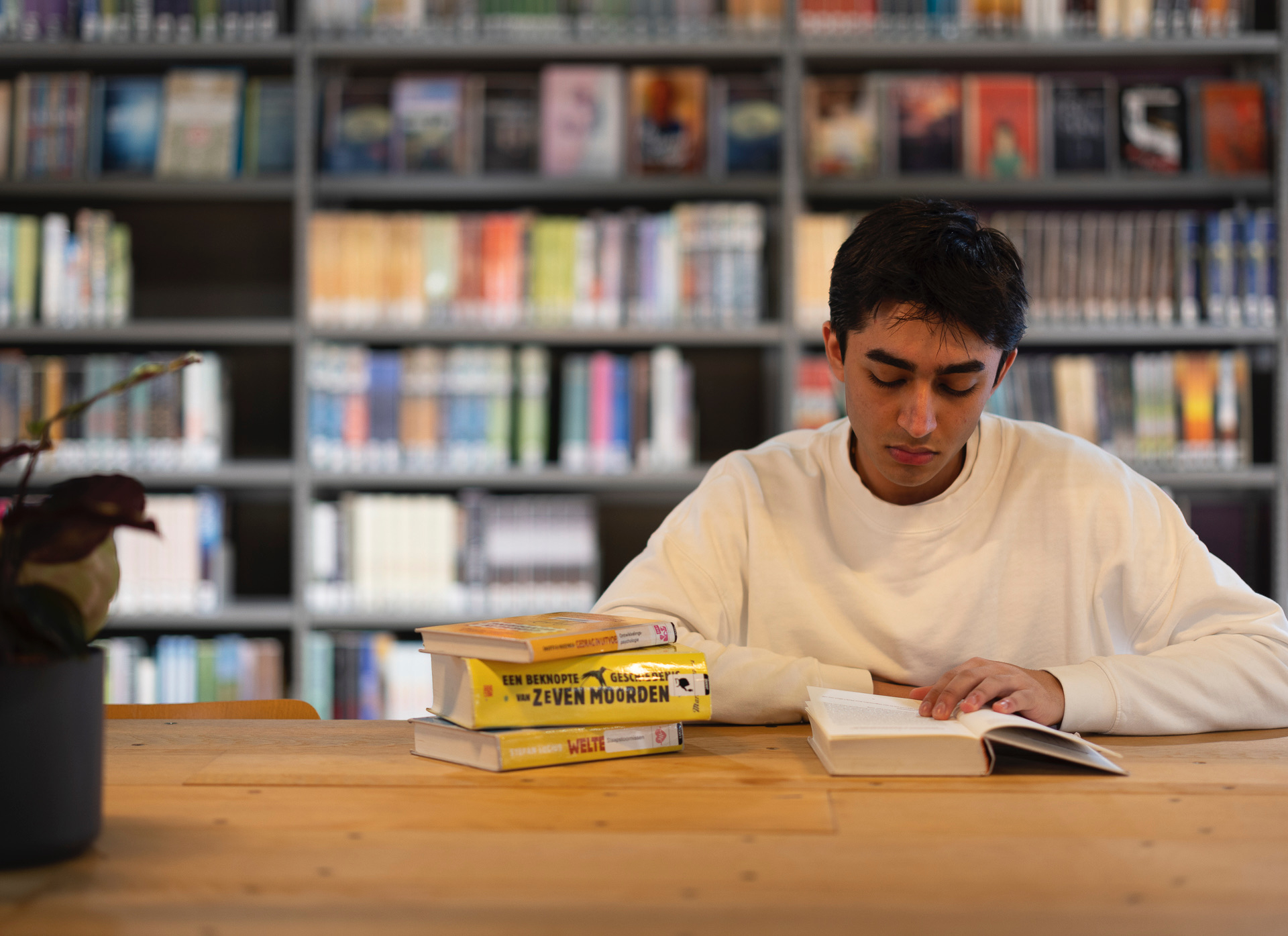
Interior design can also help lower barriers to learning and participation. Quiet reading areas, community tables, and flexible rooms support different forms of reading, learning and exchange. A clear layout makes activities and services easy to find. Multilingual communication and an interior that reflects the local identity can also create a sense of recognition. In this way, programming and interior design reinforce one another.
Learn and connect at multilingual meetups
Bibliotheek Bonaire offers an inspiring example. In spring 2025, the library opened at a new temporary location in Kralendijk and quickly grew into a vibrant place for the community.
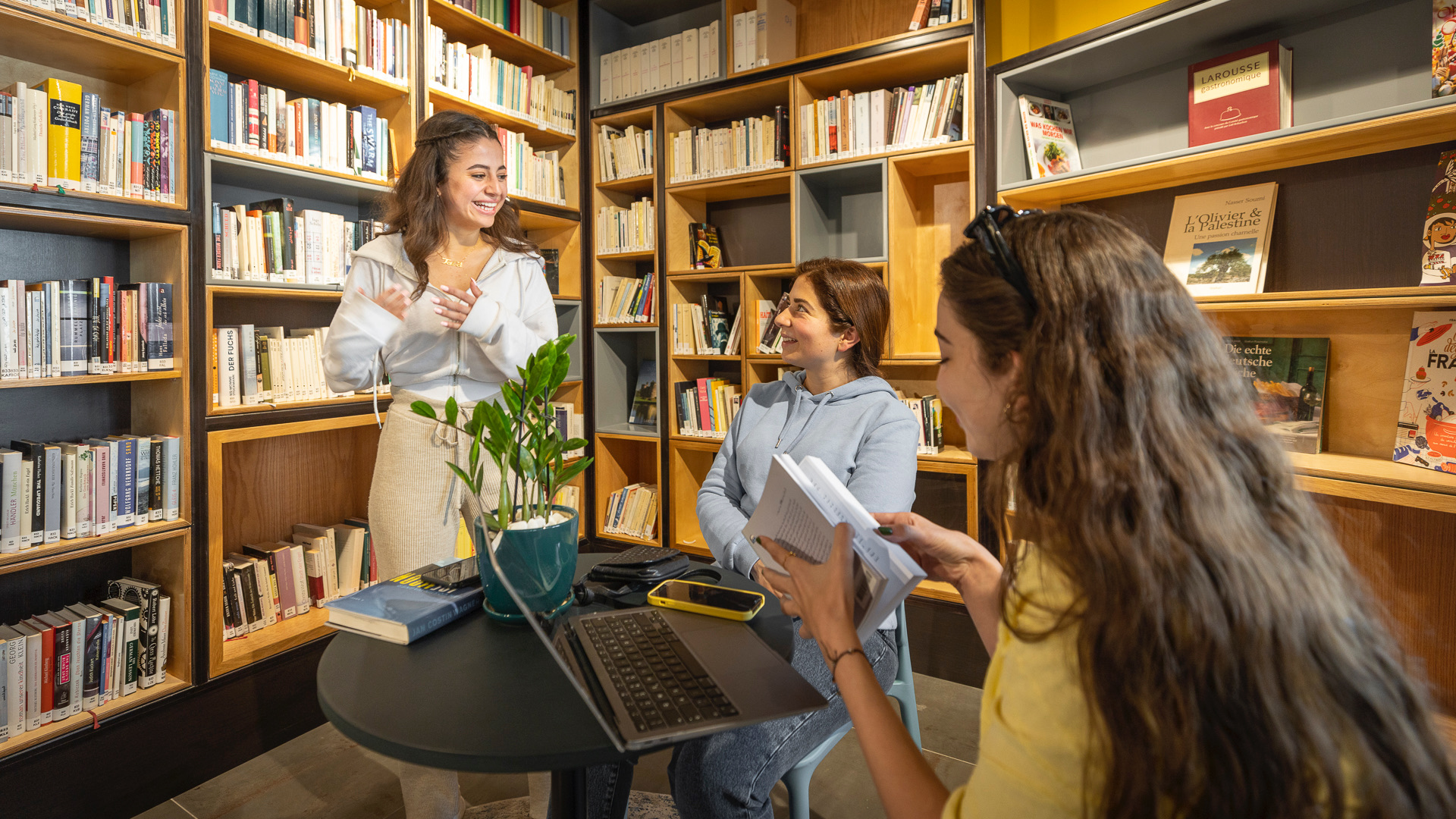
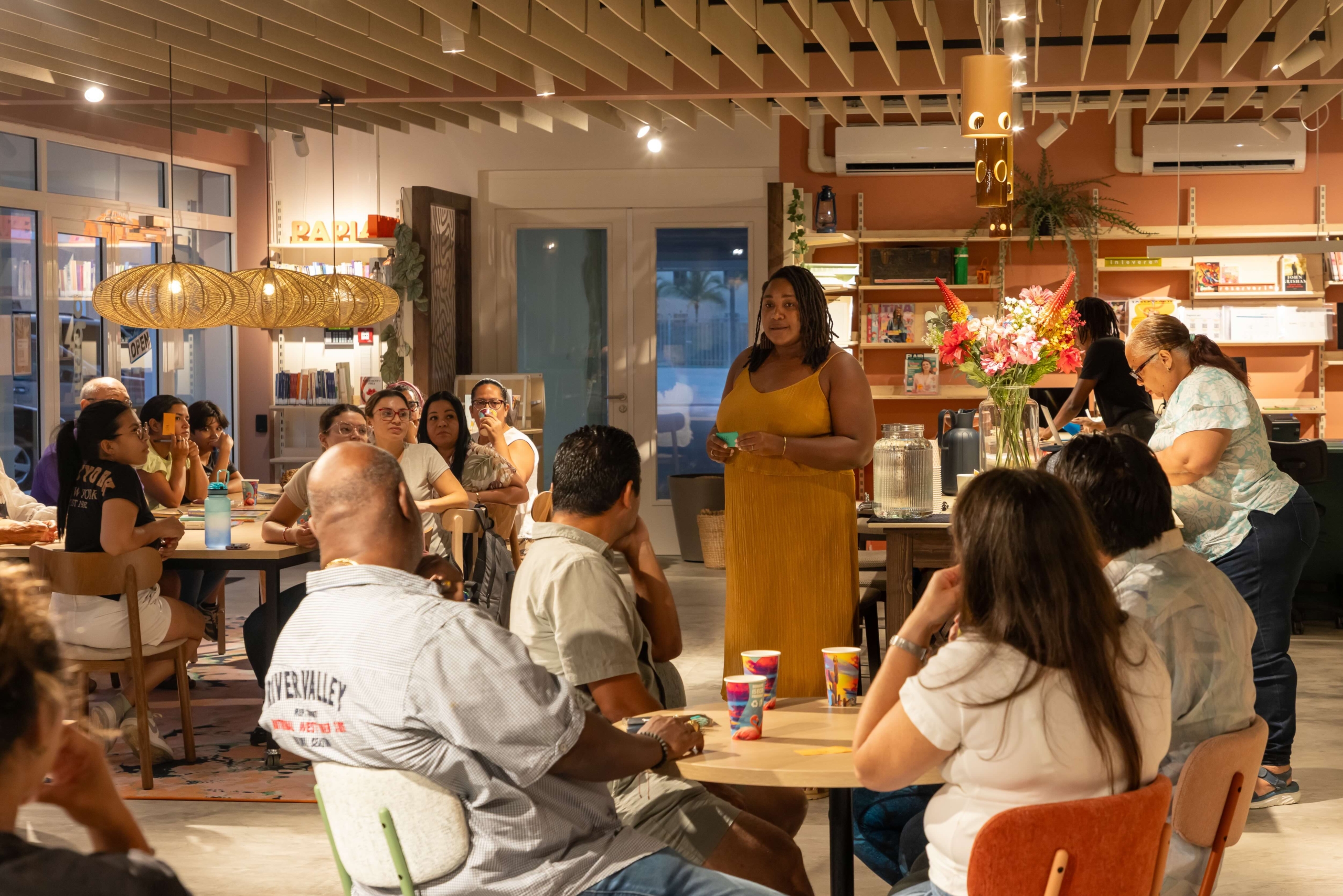
Its diverse programming reflects the island’s multilingual society. One example is Snèk di idioma (“Language Snack”), a monthly gathering centered on language and culture where visitors practice different languages around a set theme.
The interior also contributes. Sheltered yet visible seating areas offer a sense of calm without separating visitors from others. Local colors, coral prints and the Papiamentu greeting Bon Bini create familiarity and bring the identity of the island indoors.
Four native languages at one table
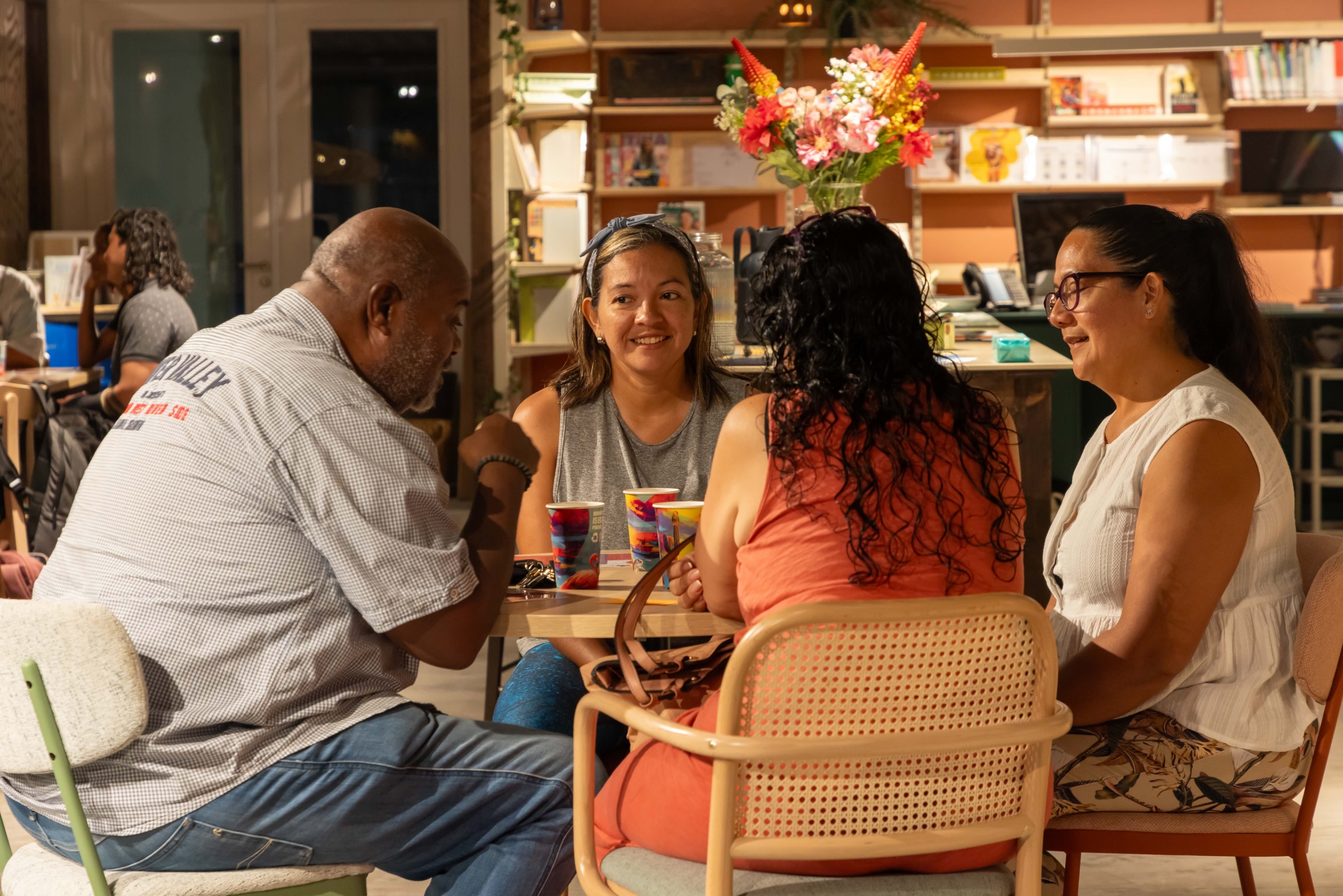
During Snèk di idioma, people with different native languages sit together at one table. “That mix is exactly what makes it so special,” says Danique Verkerk, Basic Skills Program Coordinator at Bibliotheek Bonaire. “Participants speak with one another in the language they are learning: Papiamentu, Spanish or Dutch. It is not unusual to have people with four different native languages sitting together at one table.”
The approachable format helps participants to keep practicing and return. “We make a conscious effort to keep it accessible. Snèk di idioma takes place at set times, we actively promote the activity through our channels and always clearly announce the next edition. But what works best in practice is the group itself! A regular group of participants has now formed. They encourage one another and, most importantly, learn from one another. Most now return without needing any encouragement.”
The library’s home-like atmosphere also plays an important role during the meetup, Danique continues. “We arrange the room to accommodate both smaller and larger groups, so everyone can find a comfortable place. And there is always something tasty on the table. The word ‘snack’ is in the name for a reason. This creates a safe atmosphere where people feel comfortable speaking a new language out loud.”
Sources
-
- UNESCO, International Literacy Day
- UNESCO, What you need to know about literacy
- Stichting Lezen en Schrijven, Low literacy in the Netherlands
- Nature Human Behaviour, Longitudinal effect of early social media use on standardized learning outcomes
- Stichting Lezen, Literacy is associated with cognitive development
- IFLA-UNESCO, Public Library Manifesto 2022
Discover our inclusive places