Furniture that moves with you
When it comes to Design for Programmability, one question leads the way: how do you design your library to host a rich variety of activities, by and for different groups of people? The key is flexibility in both layout and atmosphere. A library that moves with its community, where there’s always something going on.
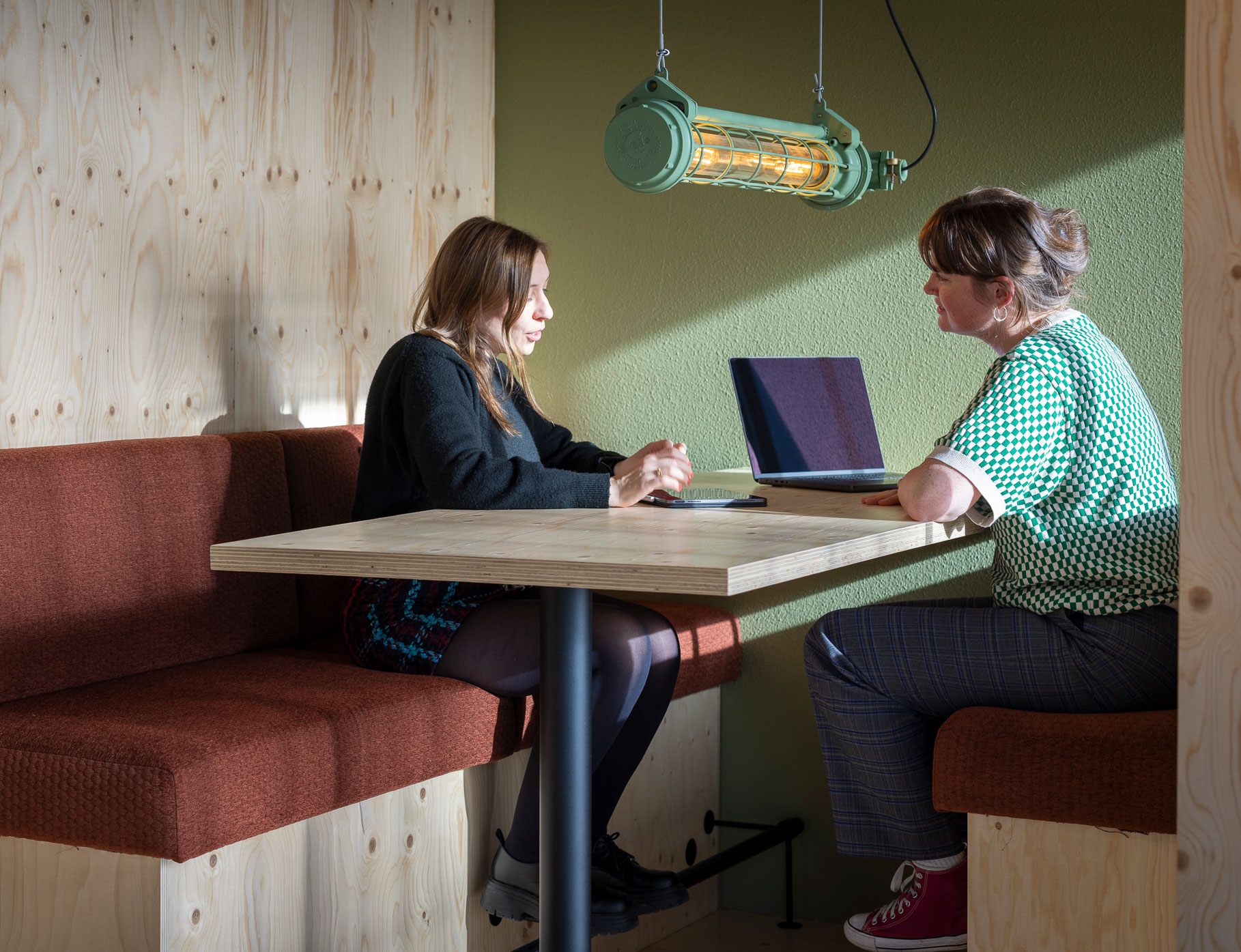
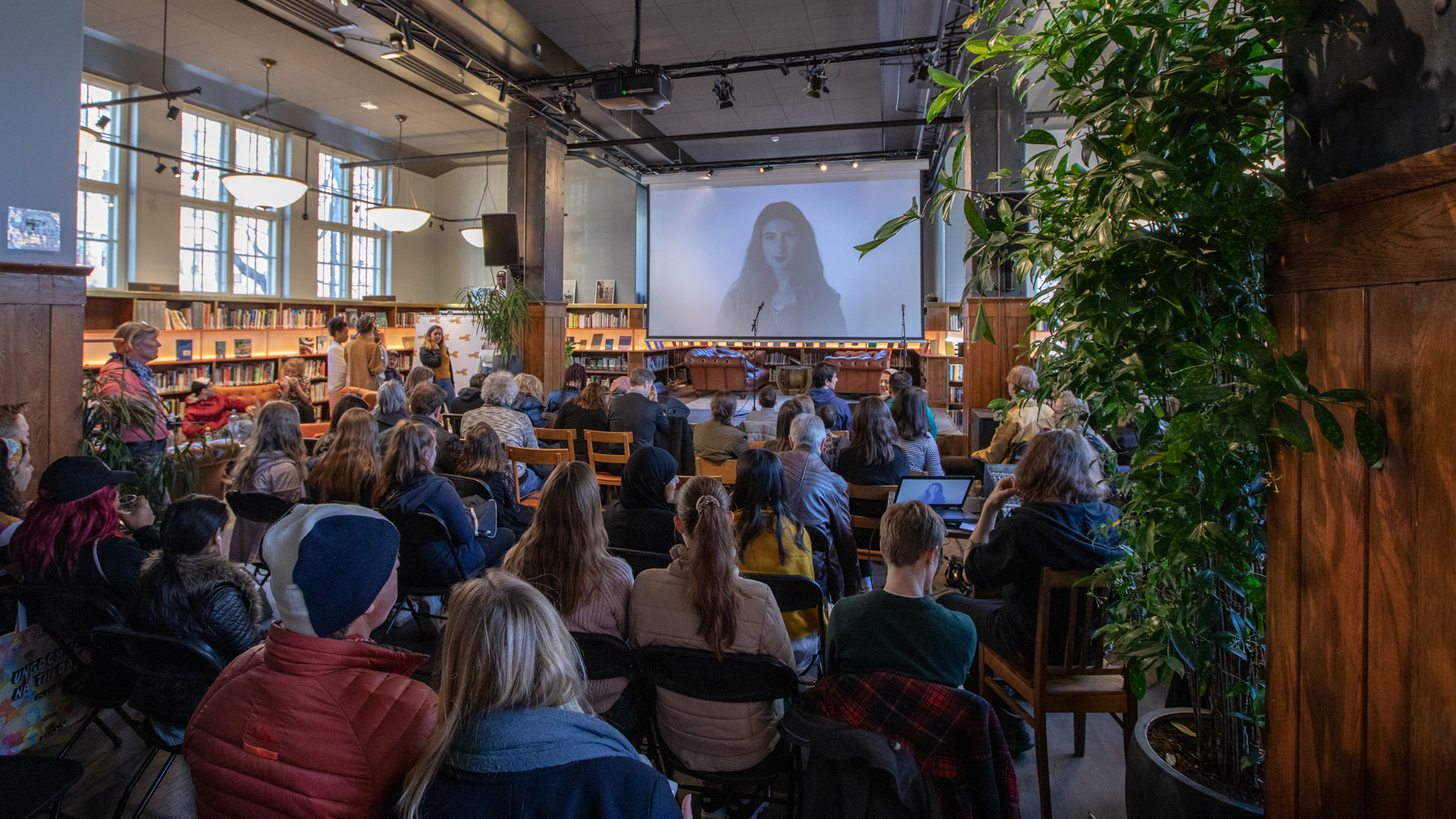
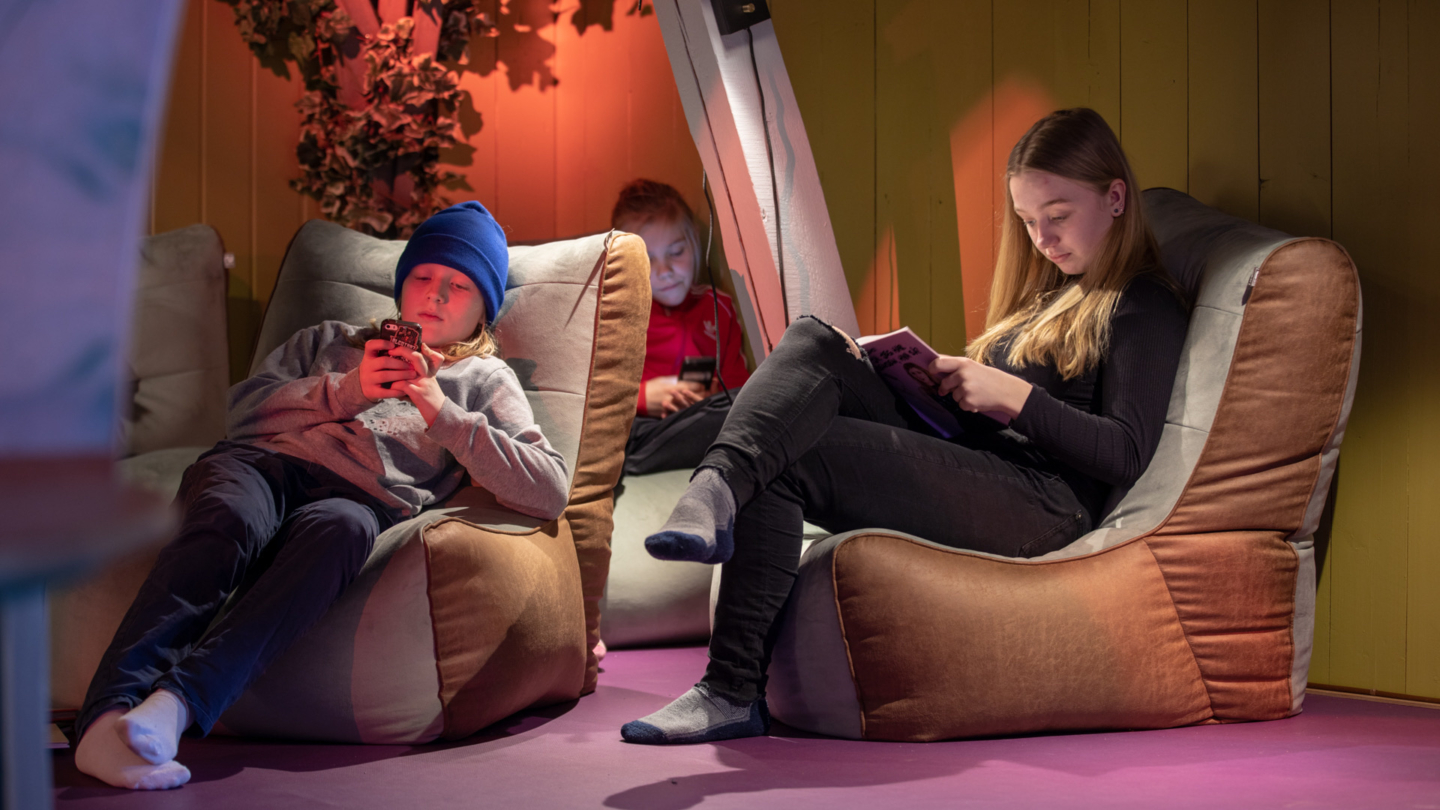
Flexibility starts with the basics: choose light, movable furniture that can be stacked or rolled away. A quiet study room can become a debate stage or performance space in no time. Think foldable chairs, modular benches or small stools. Comfort matters too – and it’s different for everyone. Teens may want beanbags and speakers. Seniors might prefer a reading nook with armchairs and warm lighting.
Making it Happen
From stairs to seats, shelves to bar
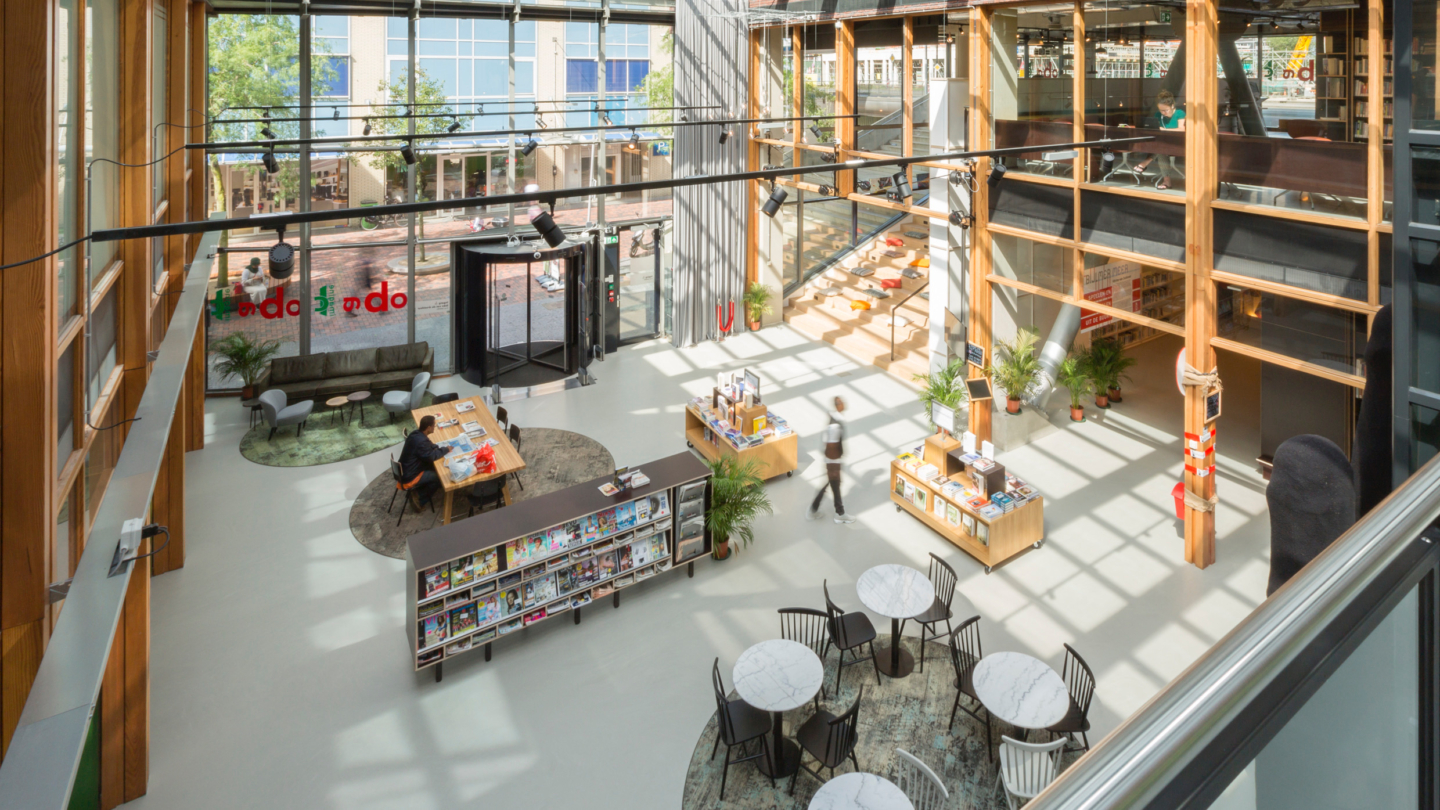
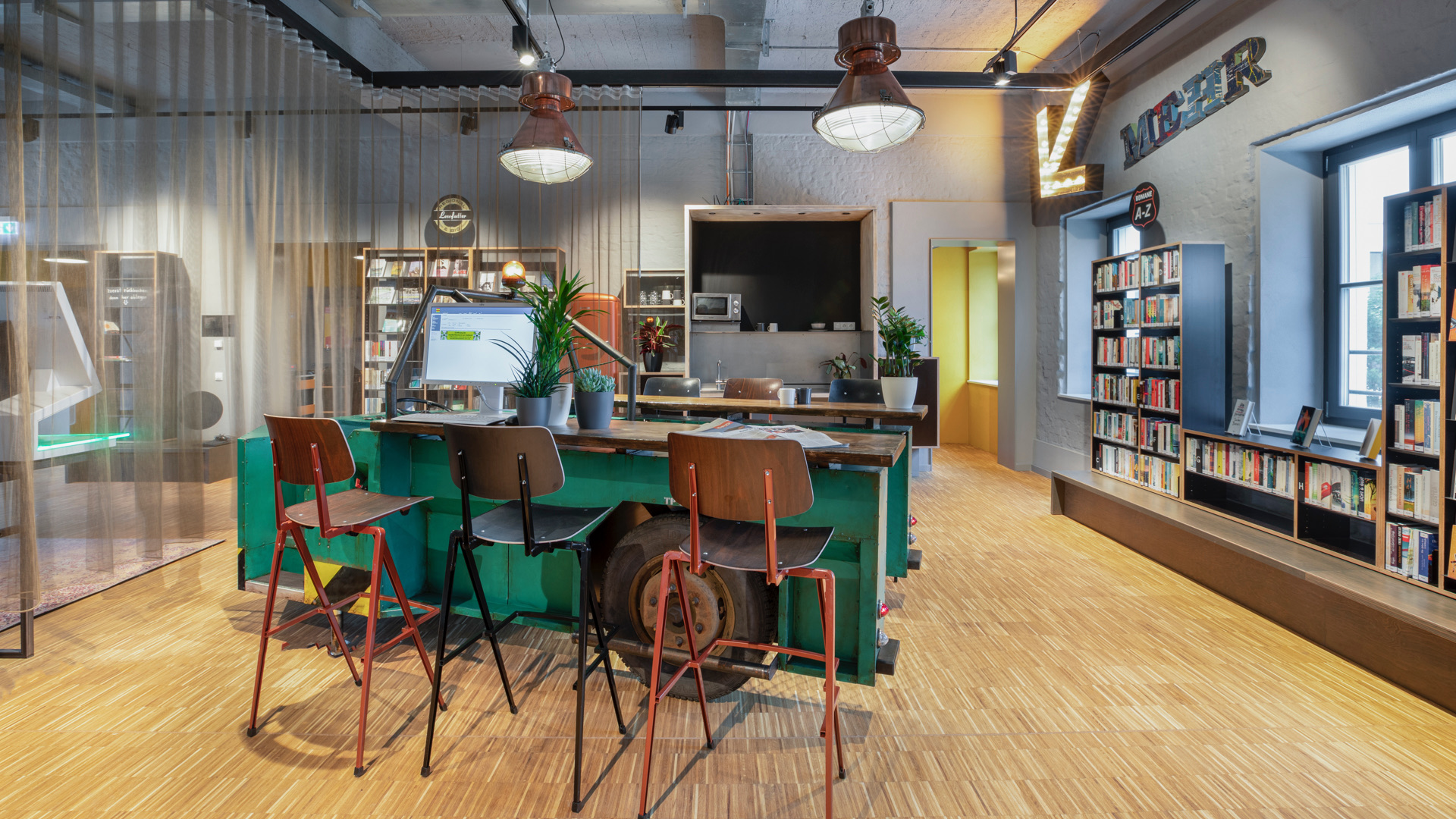
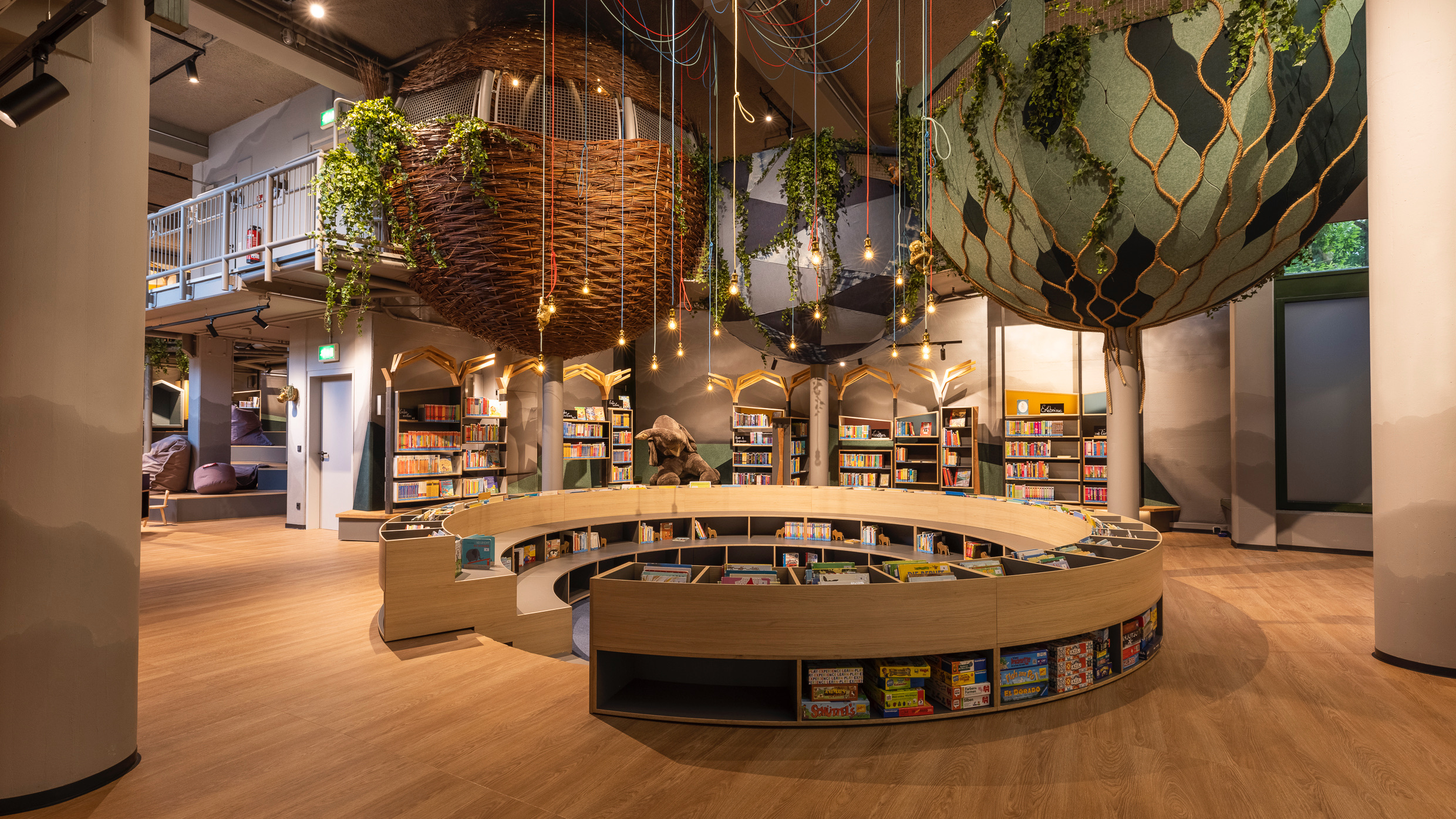
Think multifunctional. A staircase that becomes a grandstand. A reading table that transforms into a workspace. A bookshelf on wheels that becomes a bar for neighborhood gatherings. This way, your layout becomes part of the program – and the program part of the layout.
Bring the inside out
More and more libraries are showing that outdoor space matters too. A reading terrace, picnic tables and even an outdoor stage can extend your programming into the fresh air. Is there a garden behind the library? Turn it into a community garden!
Tech within reach
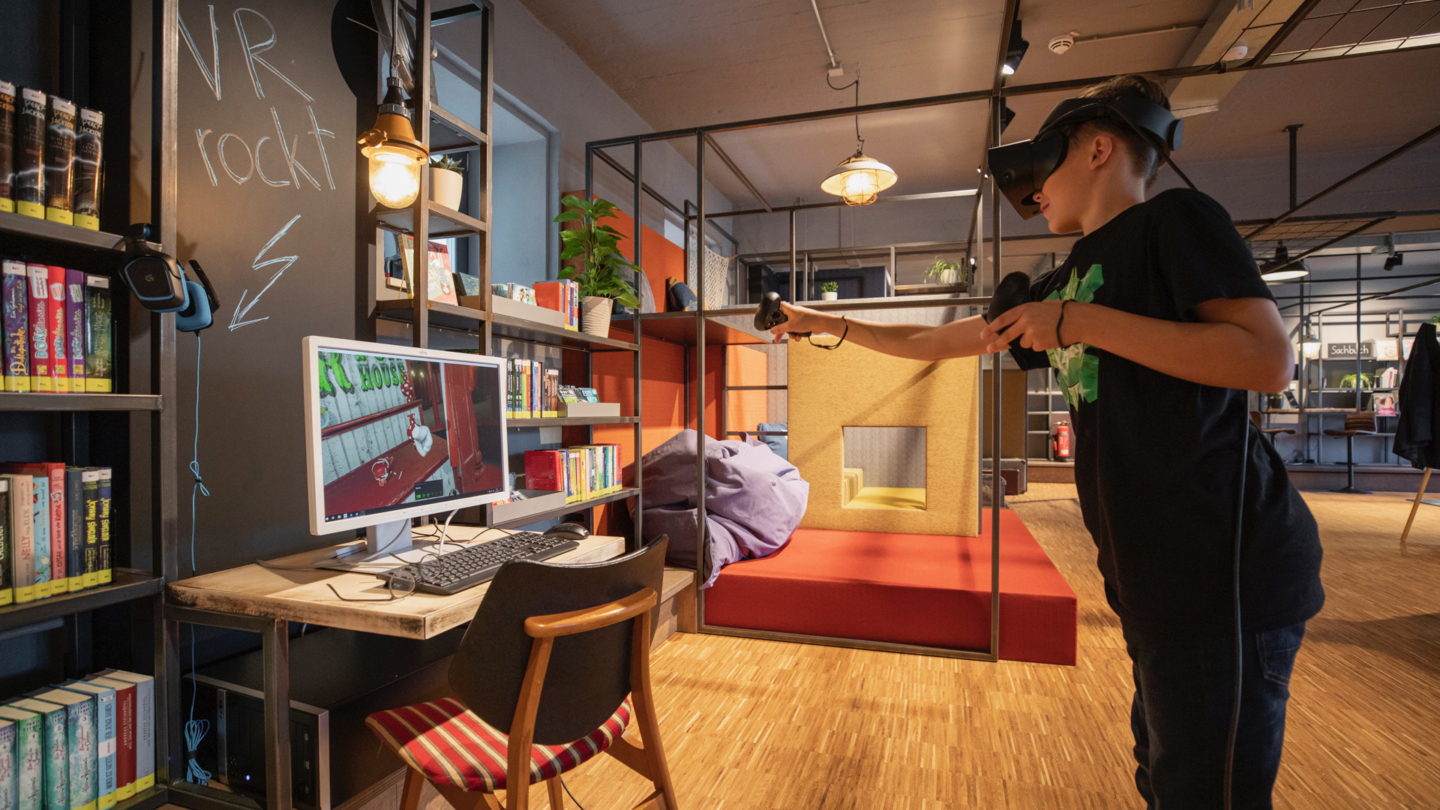
Tech is essential – but it doesn’t have to be pricey or built-in. A portable mic, mobile projector or screen go a long way. Manage them yourself or rent when needed. Just make sure there are plenty of power points, a few safe extension cords and clearly marked storage spots. It all starts with the ease of use.
A building that adapts
Planning a renovation or new build? Think adaptability from the start. Picture your space as a serving tray – ready to carry different things at different times. Design zones where multiple activities can happen side by side, or even overlap. With a thoughtful plan, smart layout and a bit of courage, you’ll build a library that’s alive – and programming itself, with and for its community.
Checklist for Programmable Libraries
- Use lightweight, stackable furniture for maximum flexibility
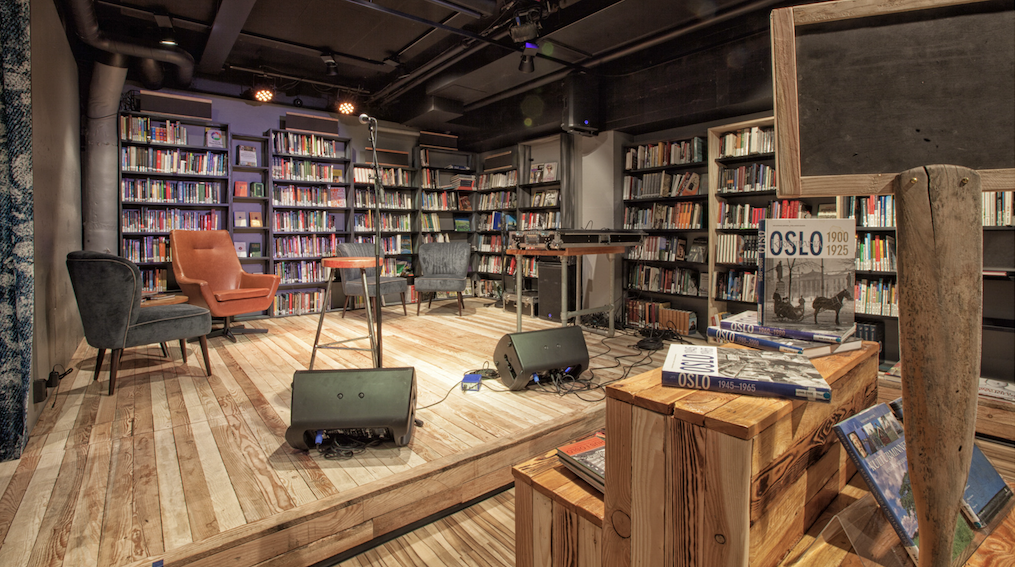
- Include a simple stage platform with clear safety markings (add a ramp for wheelchair access)
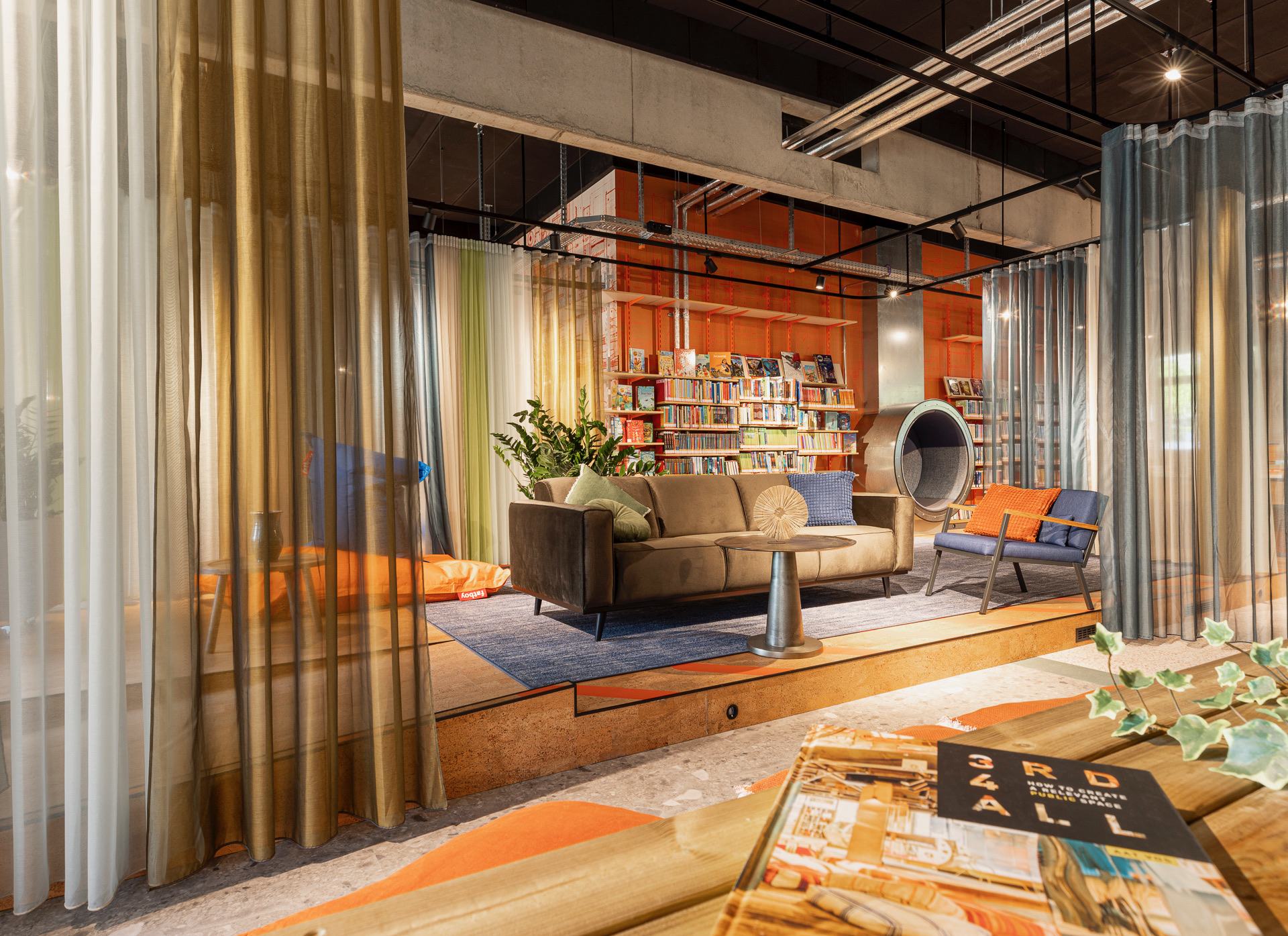
- Use curtain rails to create different zones and moods in one space
- Invest basic tech into the space like a (mobile) screen, microphone, speakers
- Let staircases double as seating
- Create informal, multifunctional zones people can make their own
Discover our inclusive places