Urban development beats with a cultural heart
On the site of a former department store, the Walkwartier was developed in the Dutch city of Oss: a new urban area where living space, hospitality and retail come together. The architectural master plan was designed by Dok Architects. Within this area, there was a need for a cultural venue with a central public role: Het Warenhuis.
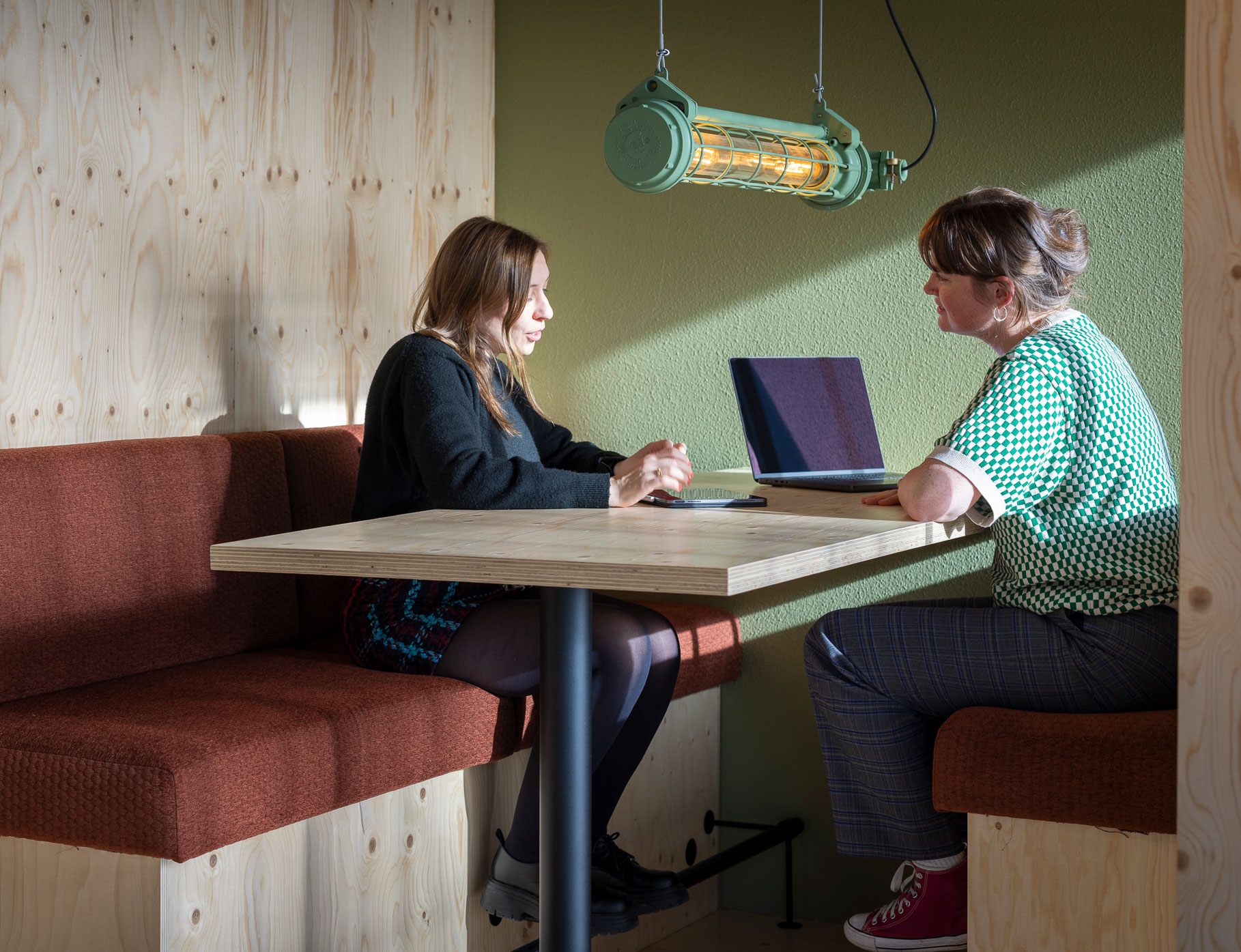
Under one roof, cultural and educational organizations collaborate to create a rich and accessible offering for the city. The Library (NOBB), the Historical Information Center Oss, Centrummanagement Oss, the Tourist Information Point, Global Goals Oss and Hooghuis now share this new space.
The challenge was to bring together these different organizations, each with its own identity and way of working, in a single building with limited space. Het Warenhuis was not meant to become a mere collection of functions, but a coherent place that invites people to meet, learn and linger.
“Het Warenhuis proves that architecture in which functionality and encounter come together can grow into a place that is used intensively and enthusiastically from day one. And that works!”

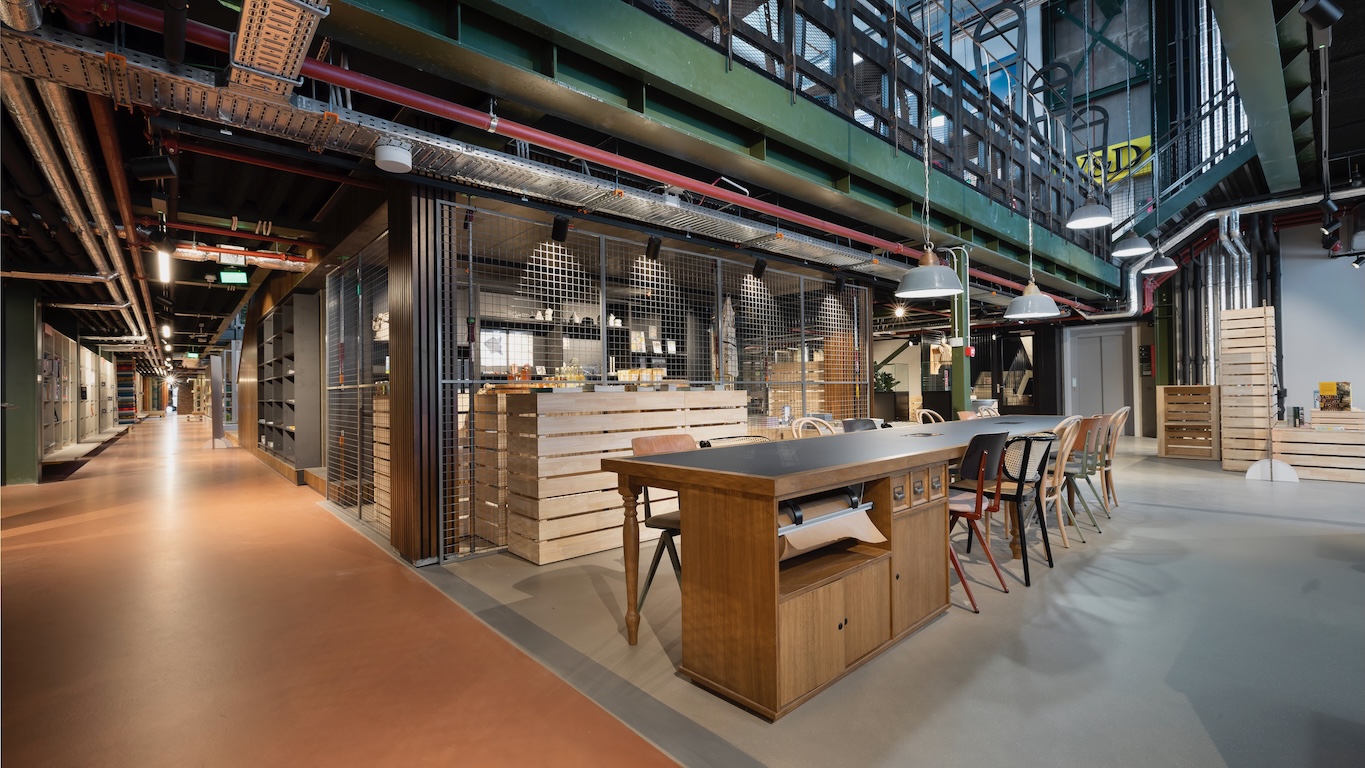
Industrial Inspiration
“Before we started designing, we wanted to understand how industrial environments are experienced. It turned out that spatial illogic was the key to experience, and that illogic is exactly what we deliberately applied in Oss.”

The next illogical step
From the very beginning, the users of Het Warenhuis were closely involved in the design process. Through various workshops and user research, we mapped their wishes and needs, together with their social and functional ambitions. The outcomes were captured in a lookbook bringing together ideas, references and aspirations.
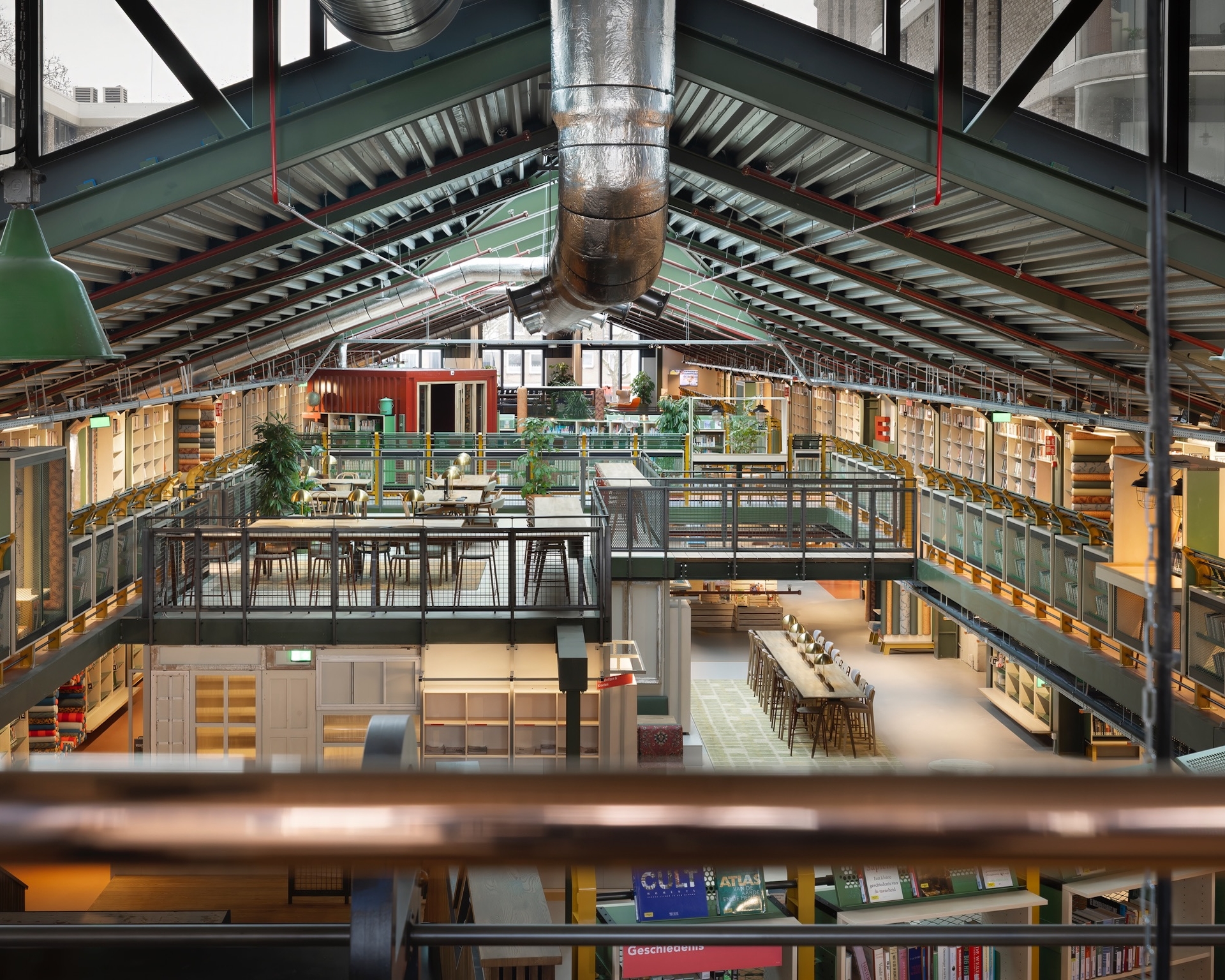
The rich industrial heritage of Oss played an important role in this process. Before translating it into a design, we wanted to understand how industrial logic and spatial structures influence the experience of a place, and how this layered character could be transformed into a contemporary interior. For additional research, we traveled to Germany, where former factory sites have been transformed and repurposed.
Based on our findings, the conclusion became clear: these environments were originally designed for rational processes rather than for people. While this results in a clear process logic, it also often results in a less predictable, sometimes illogical spatial layout. For instance, a layout with unexpected routes, unusual proportions and seemingly strange transitions. Precisely this spatial illogic proved to be the key to surprise and experience. We therefore deliberately applied it in the interior of Het Warenhuis.
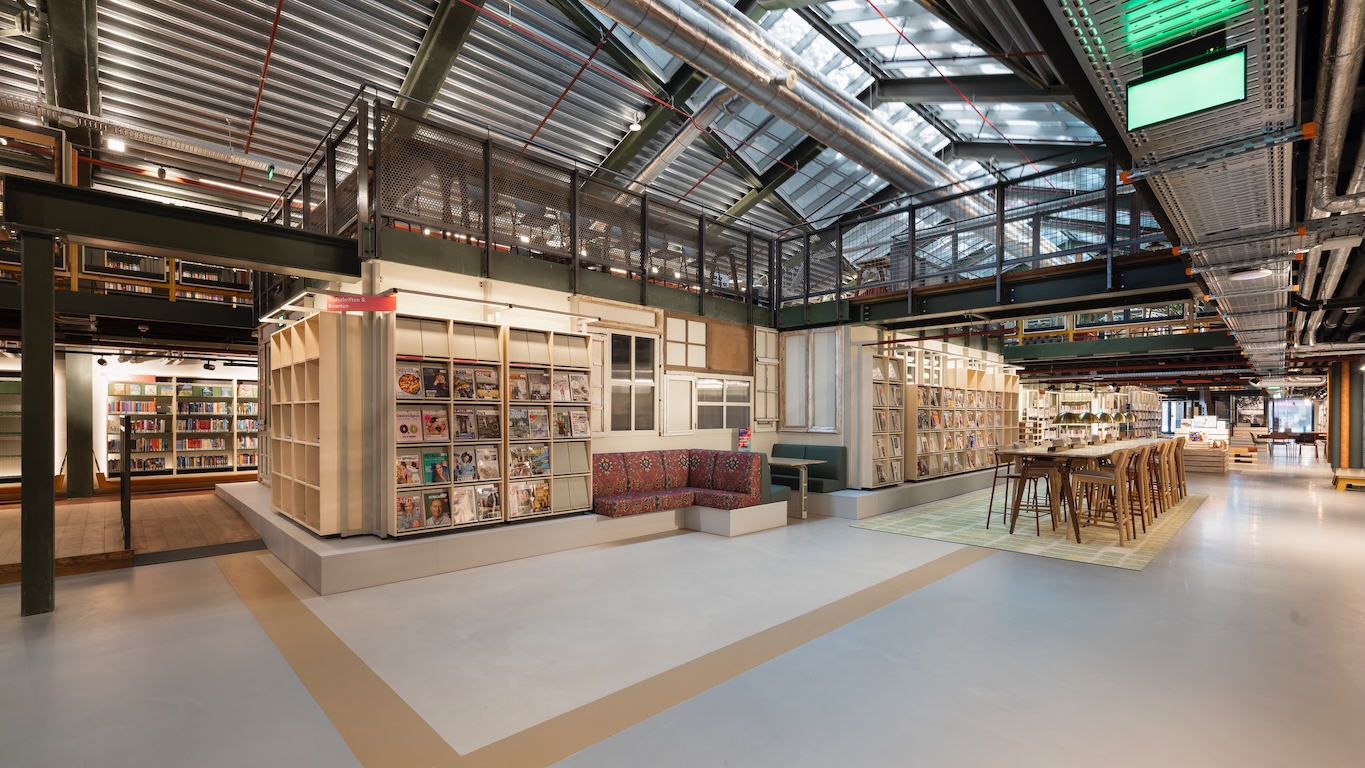
Spatial Stories
Warehouse wow-factor
To give form to these insights, together with the Historical Information Center Oss we developed a fictional industrial process, inspired by Oss as an industrial city and its rich local industrial past. Elements from a wide range of industries come together in this narrative. From textiles and food to logistics and pharmaceuticals: characteristic components from these worlds are linked into one new process. Essentially, the factory of Oss.
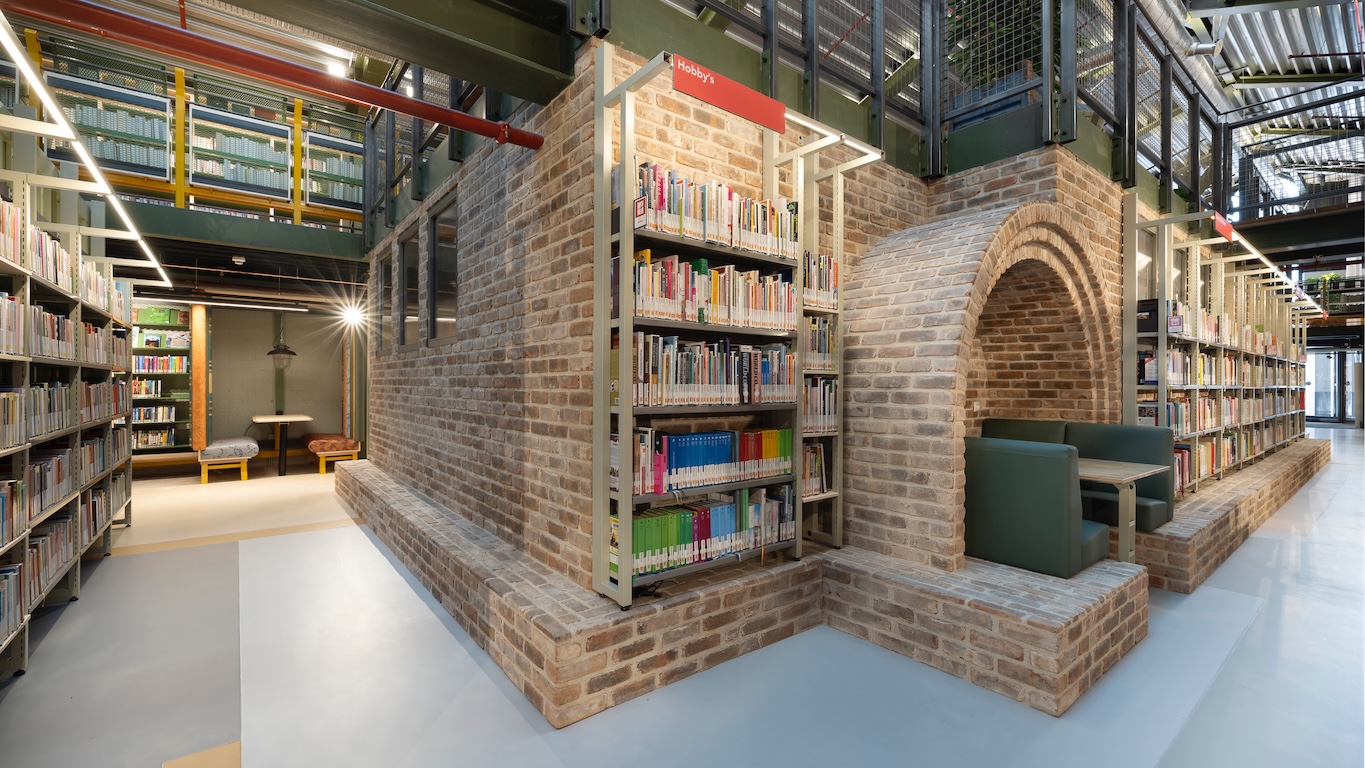
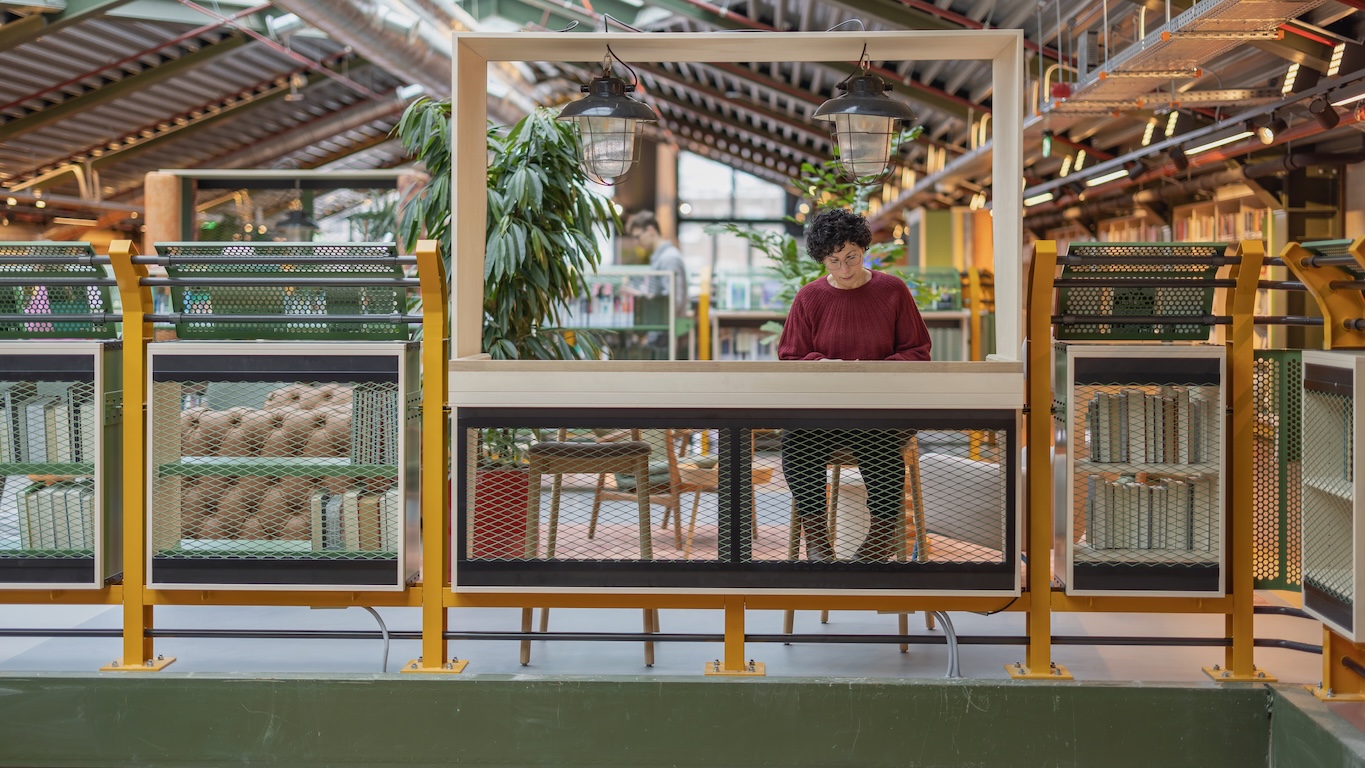
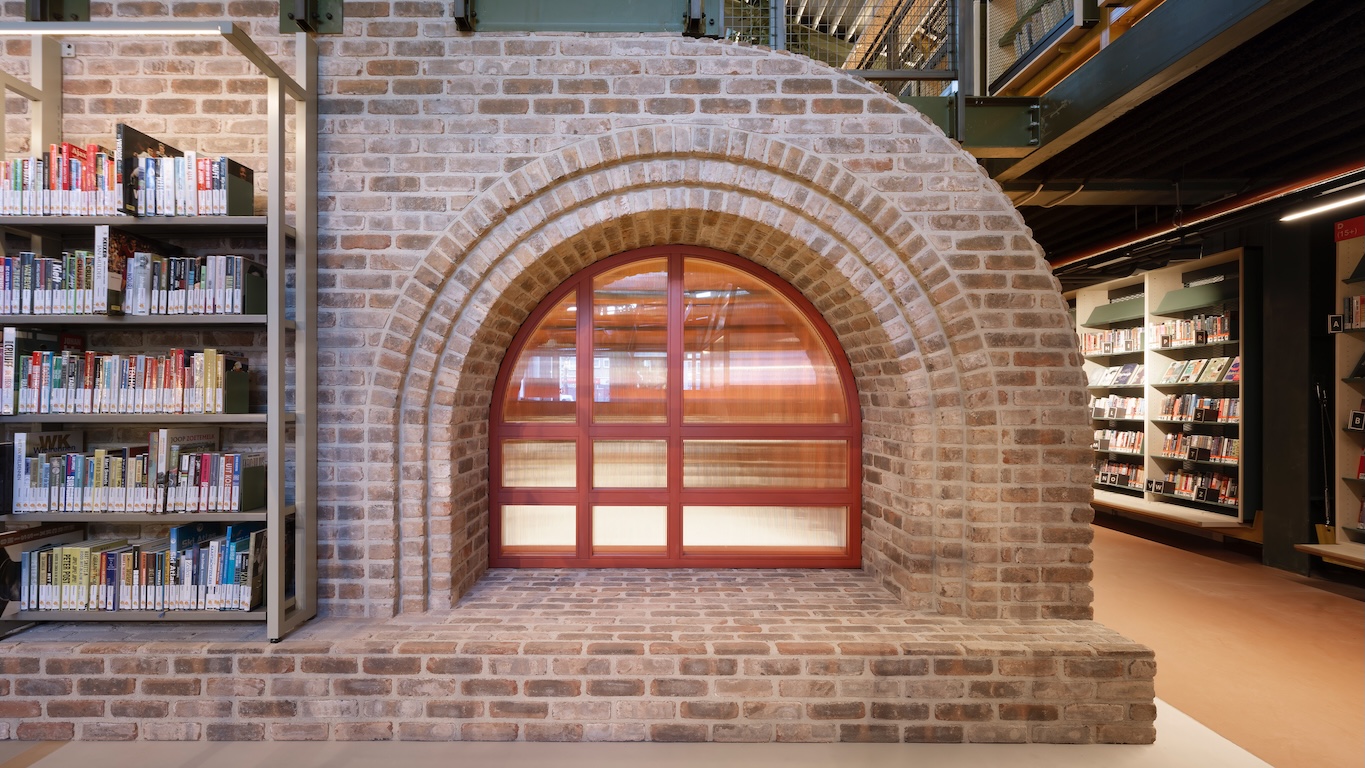
This explains interior elements such as the oven, the test bakery, crates and pallets, as well as the cabinets with pipes and conduits. The characteristic production line of the food industry, from delivery to sale, has been translated into the space.
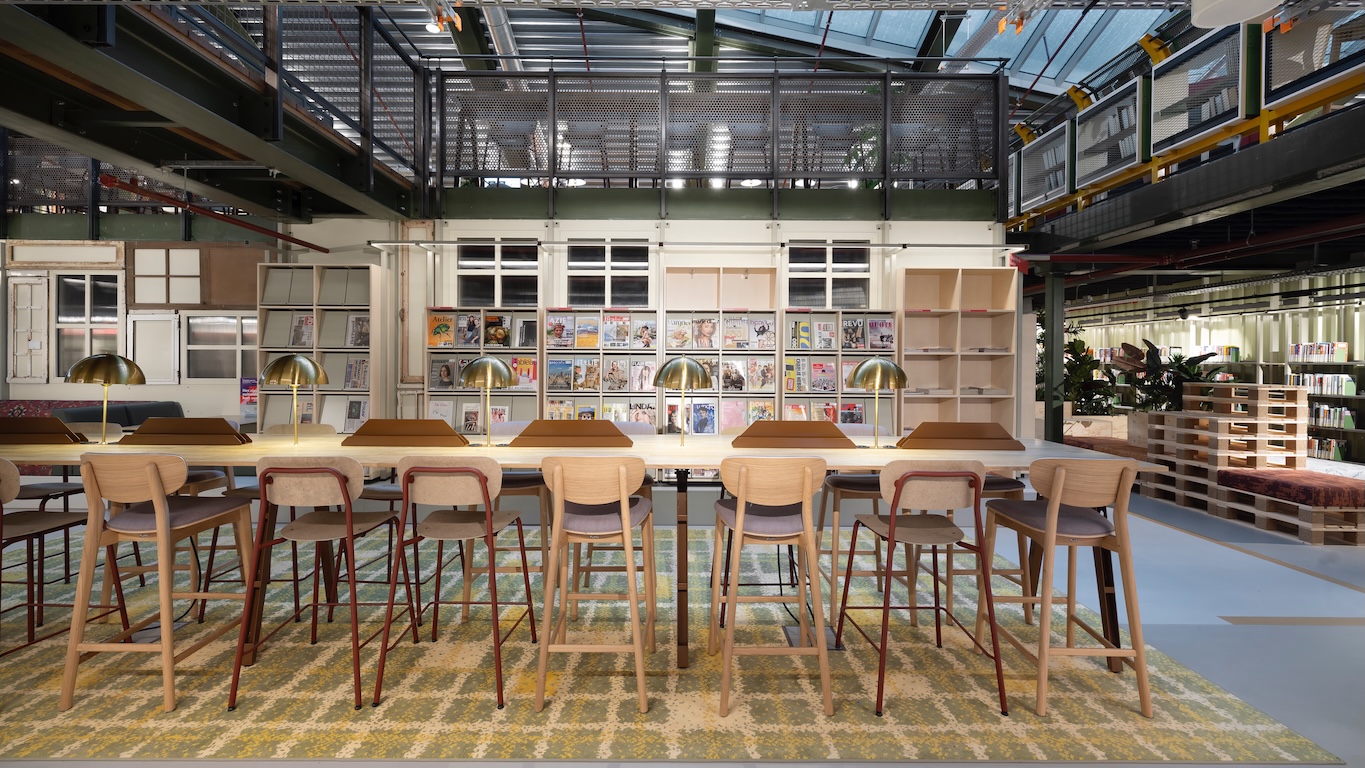
The result is an industrial all-inclusive experience: a layered interior in which routing and zoning emerge from one cohesive industrial narrative, allowing for diverse forms of use without compromising the openness of the building. Het Warenhuis thus functions as an urban living room with a high experiential value: a place full of unexpected corners, passages, and sightlines, where routes unfold, old stories and new functions come together, and visitors are invited to wander, stay and create new memories.
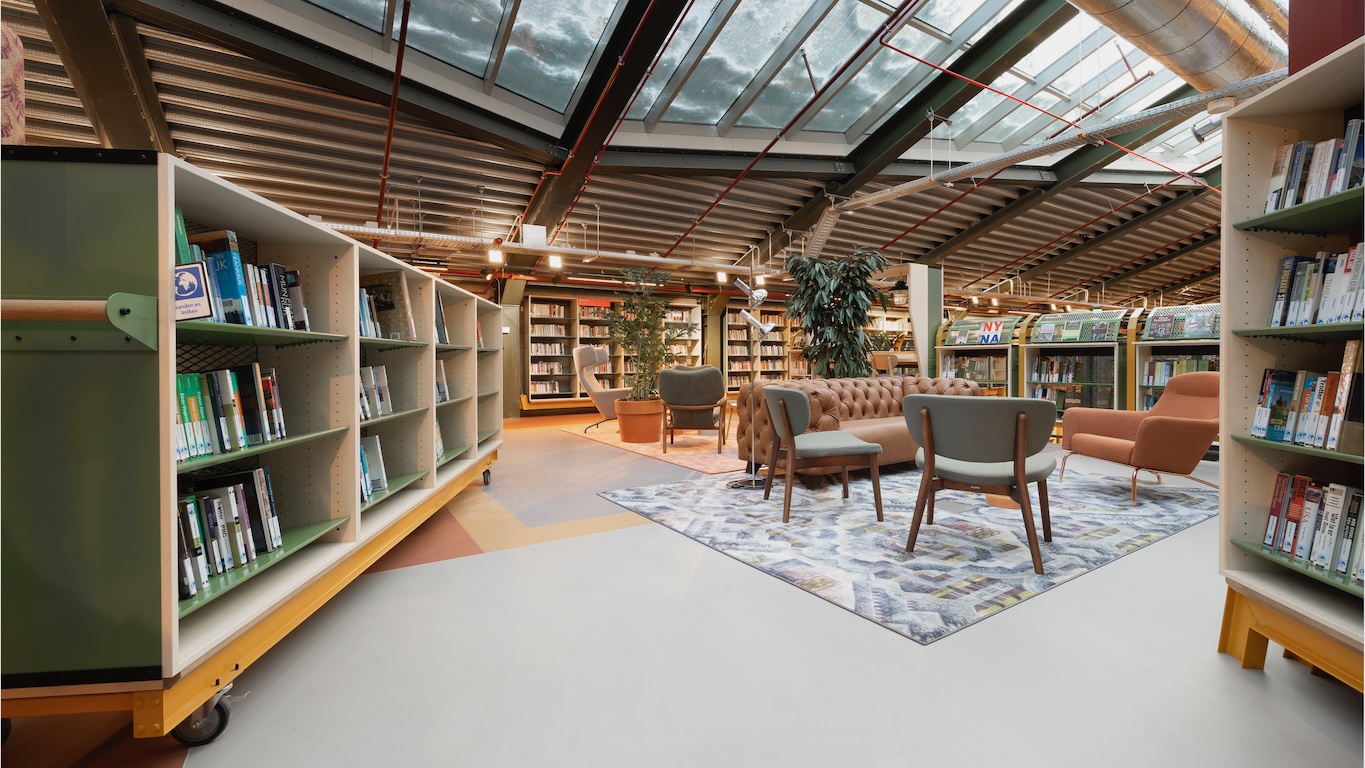
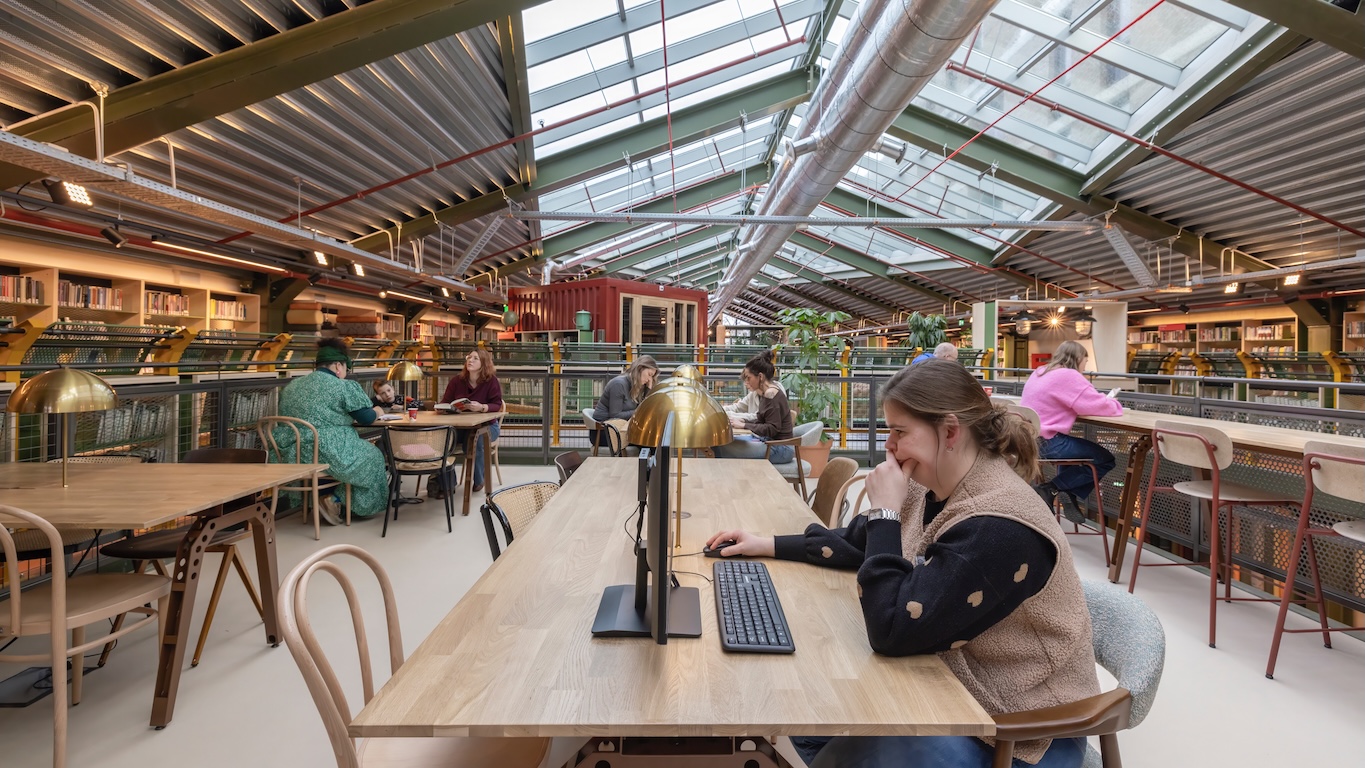
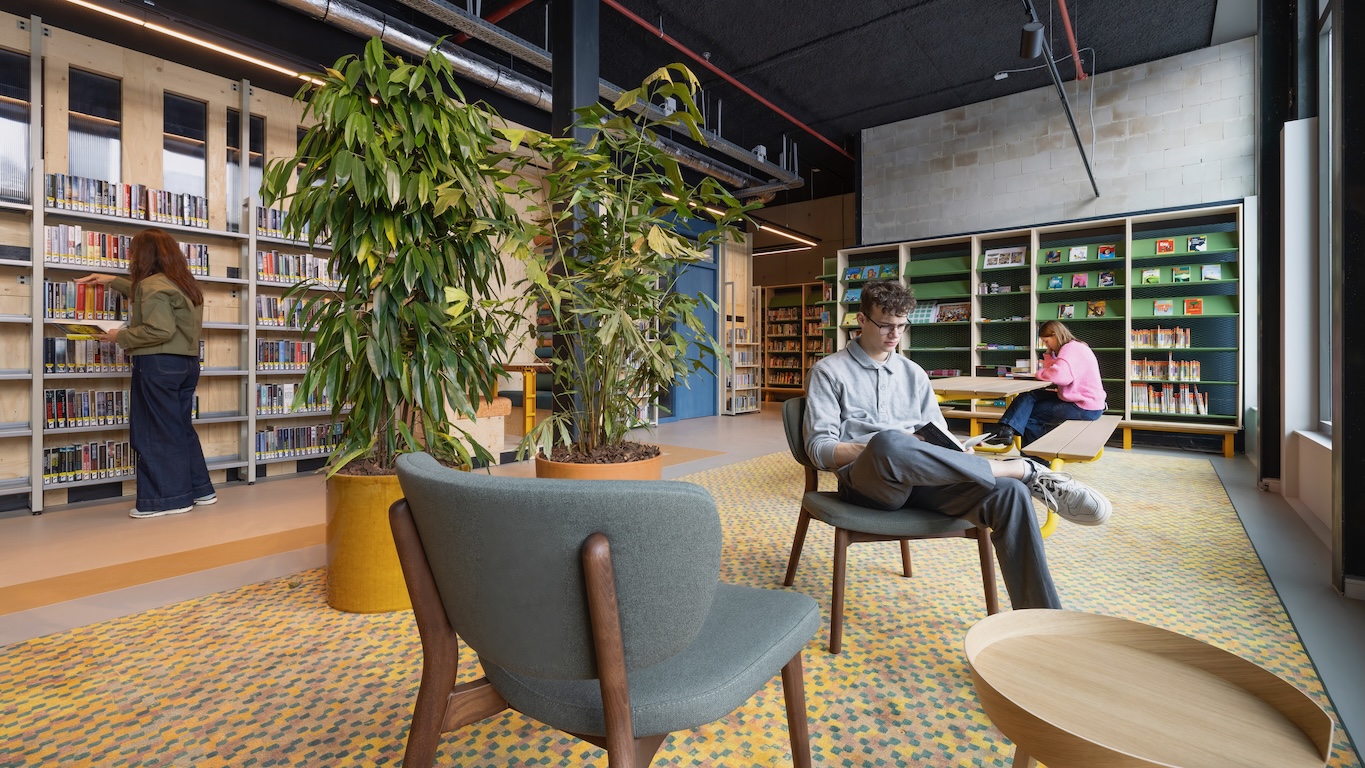
“According to Aat Vos’s apple pie principle, the collection is placed along the walls, creating space in the center for the ‘delicious filling’: a vibrant program and room for encounter.”
-
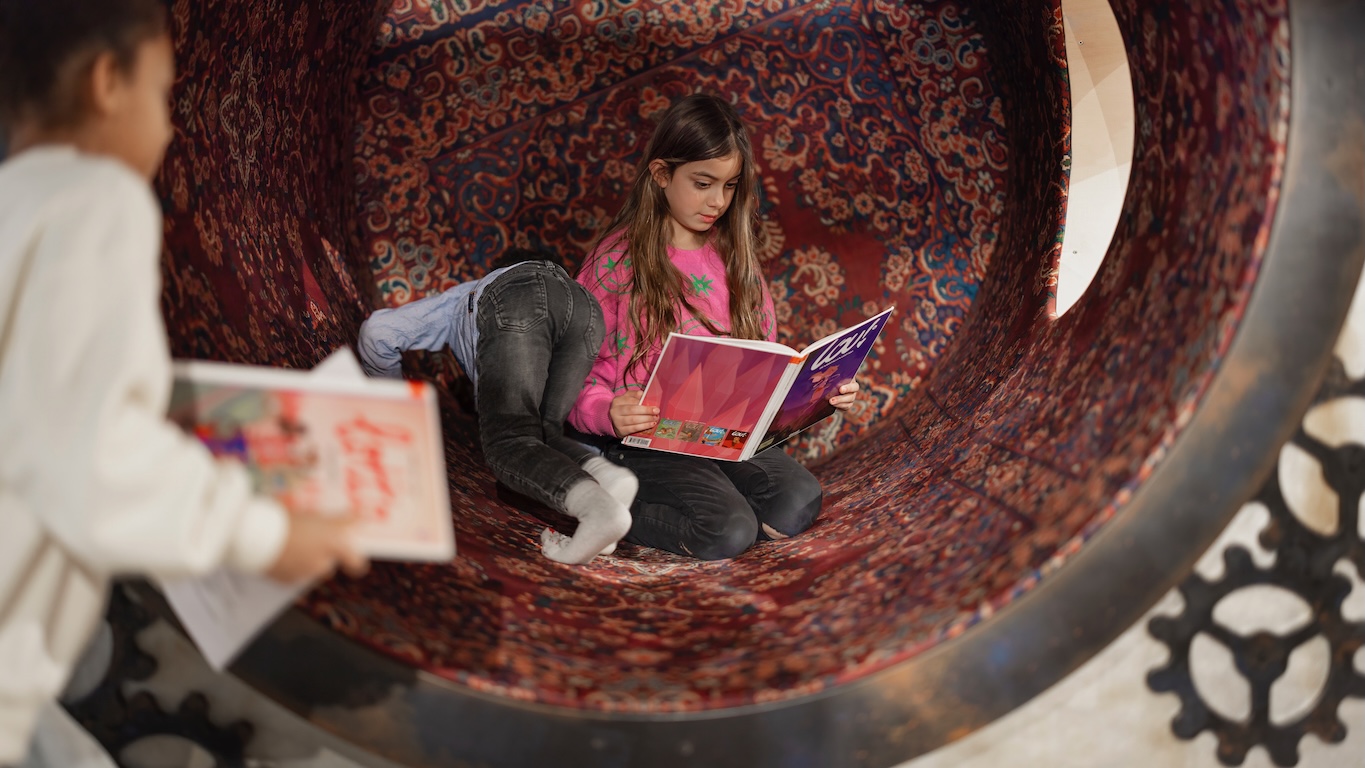
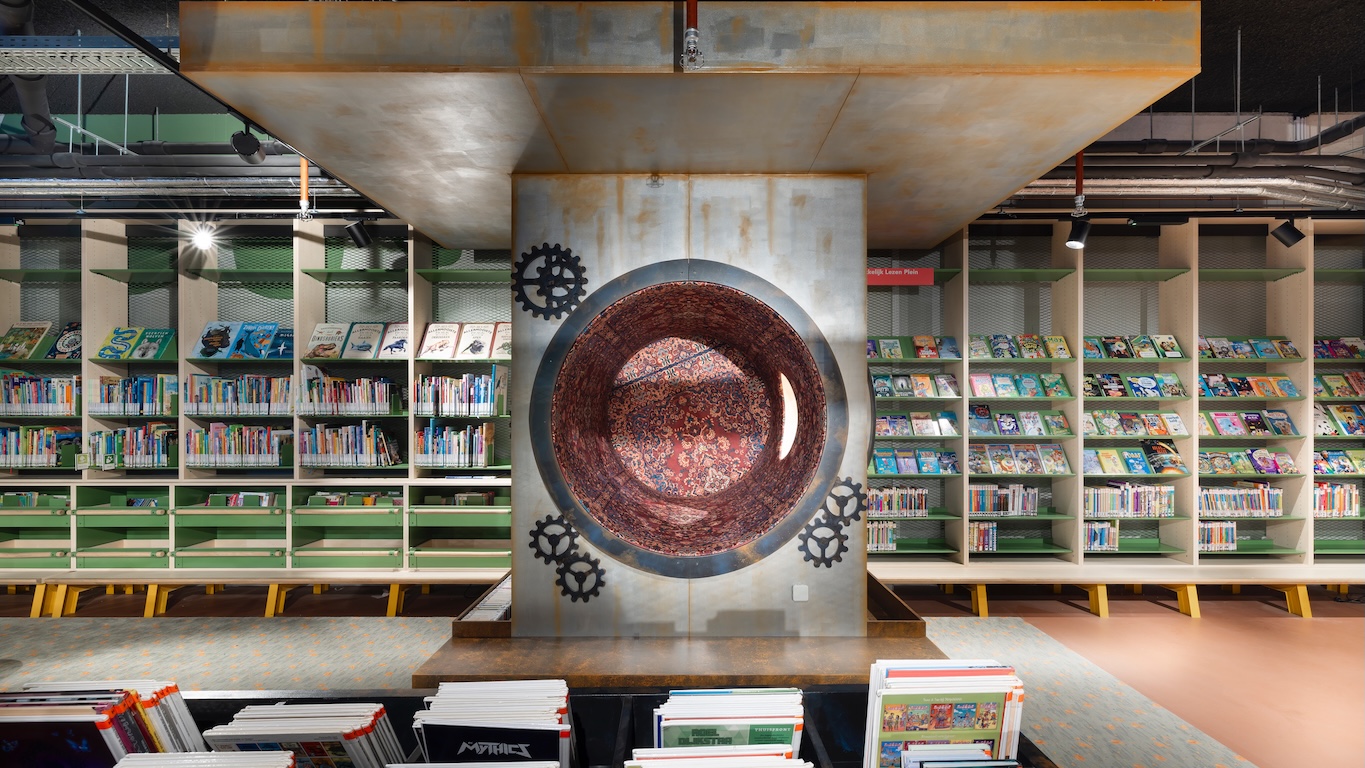
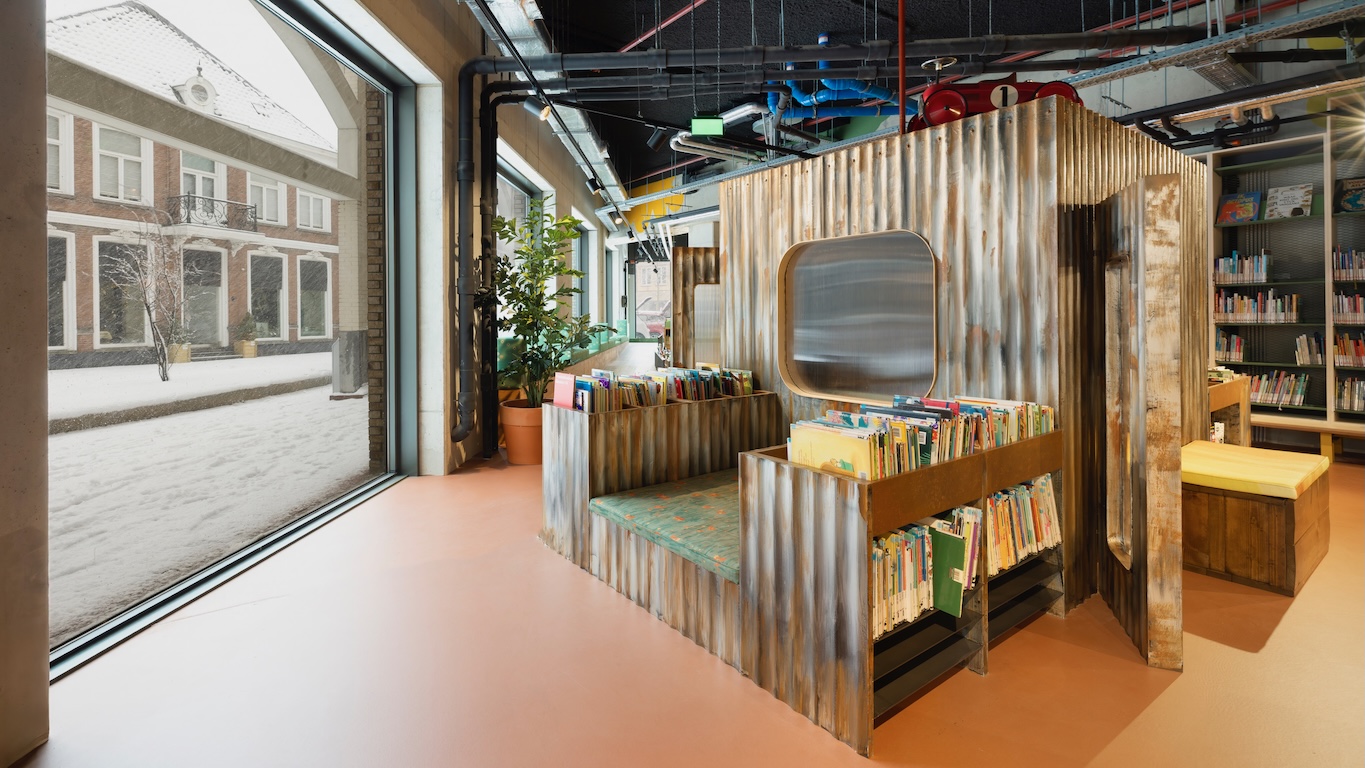
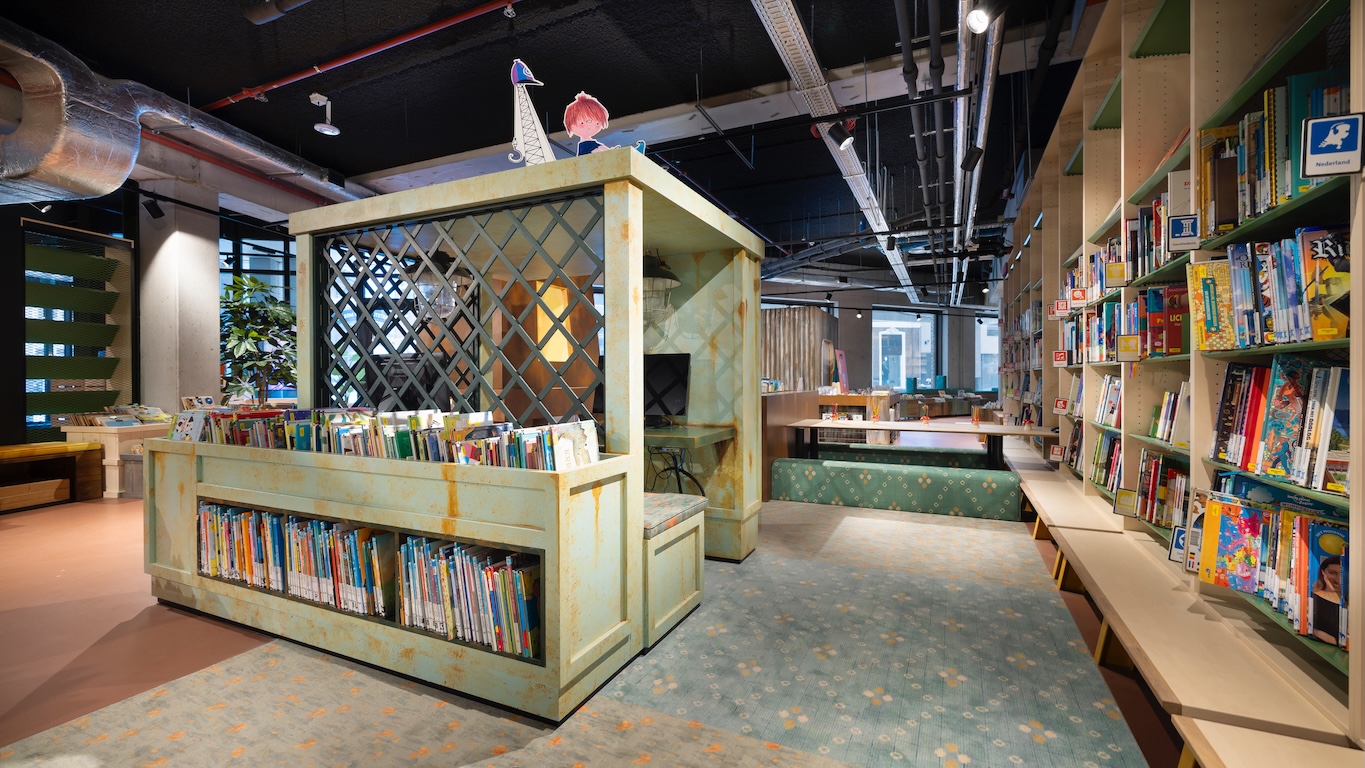
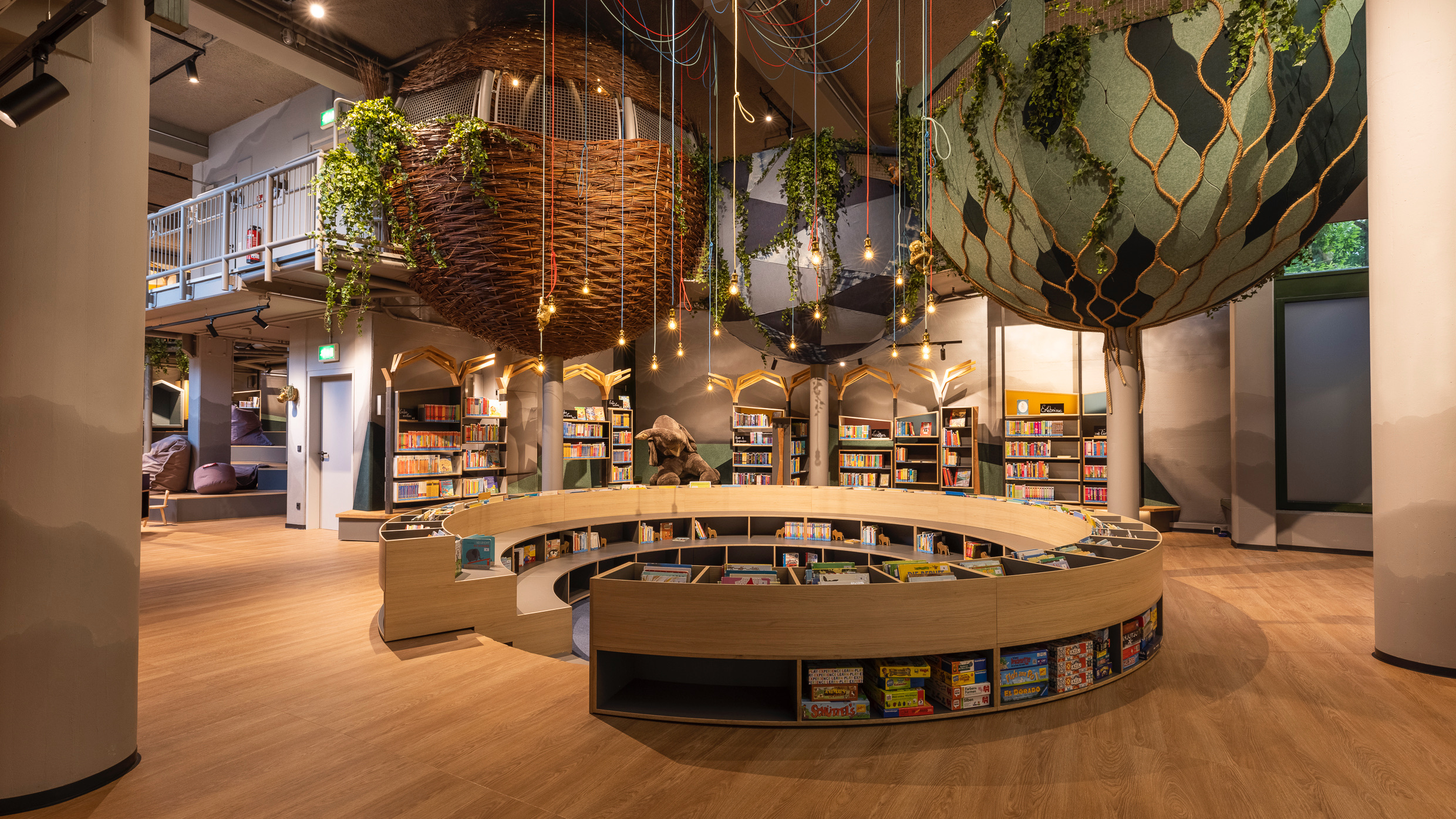
The children’s area is called the Leeslab, named after the laboratory, and offers space for experimentation.
-
-
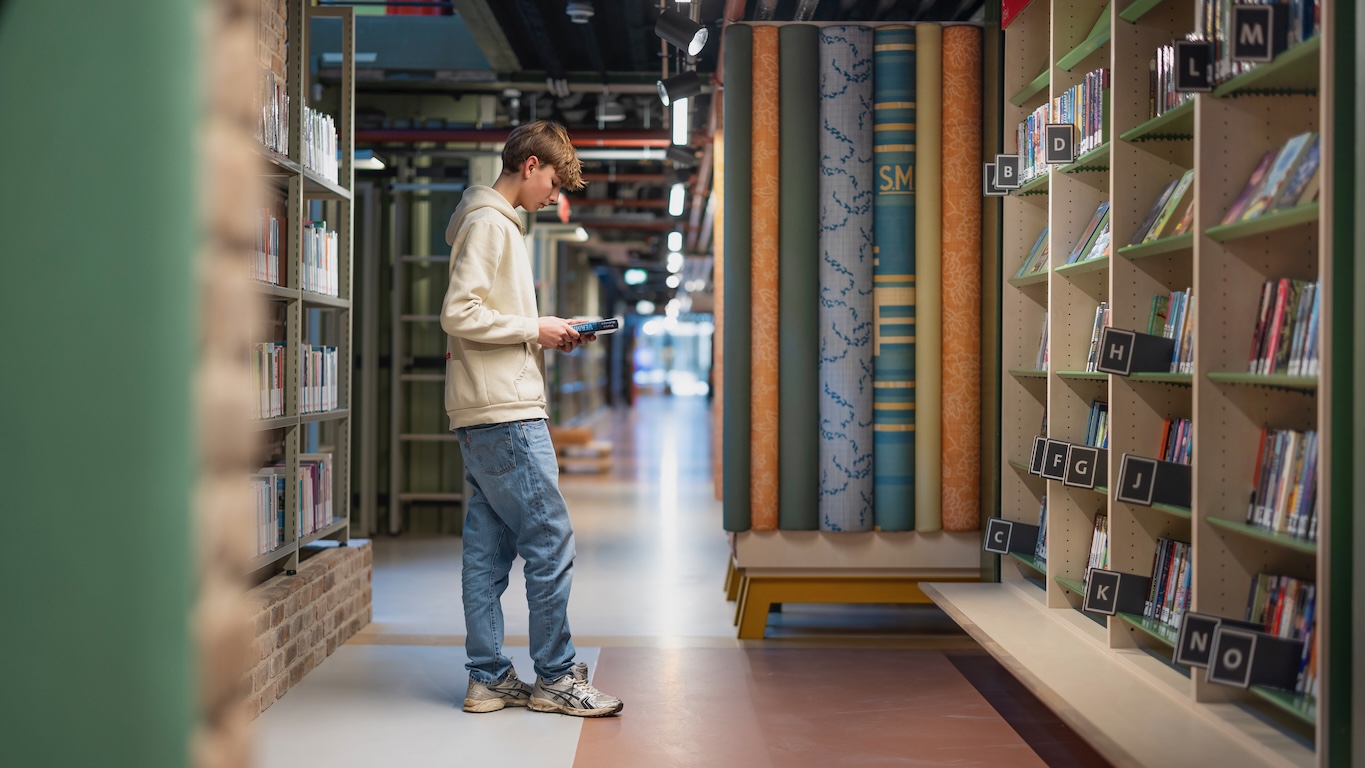
The cabinets in the library are suspended approximately thirty centimeters above the floor in various constructions, creating a distinctive visual effect.
-
-
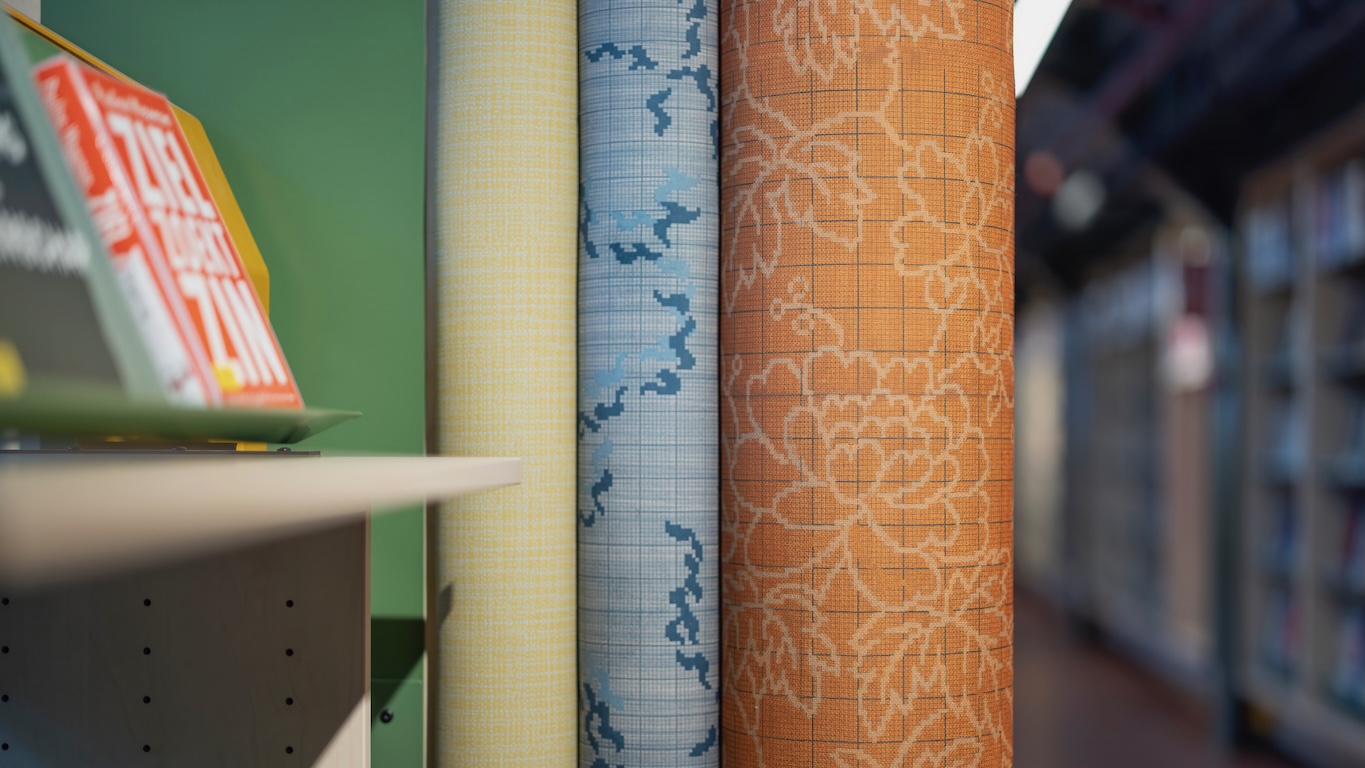
The prints on all upholstery throughout Het Warenhuis are original and were designed by the Bergoss carpet factory between the late 19th and early 20th centuries.
-
-
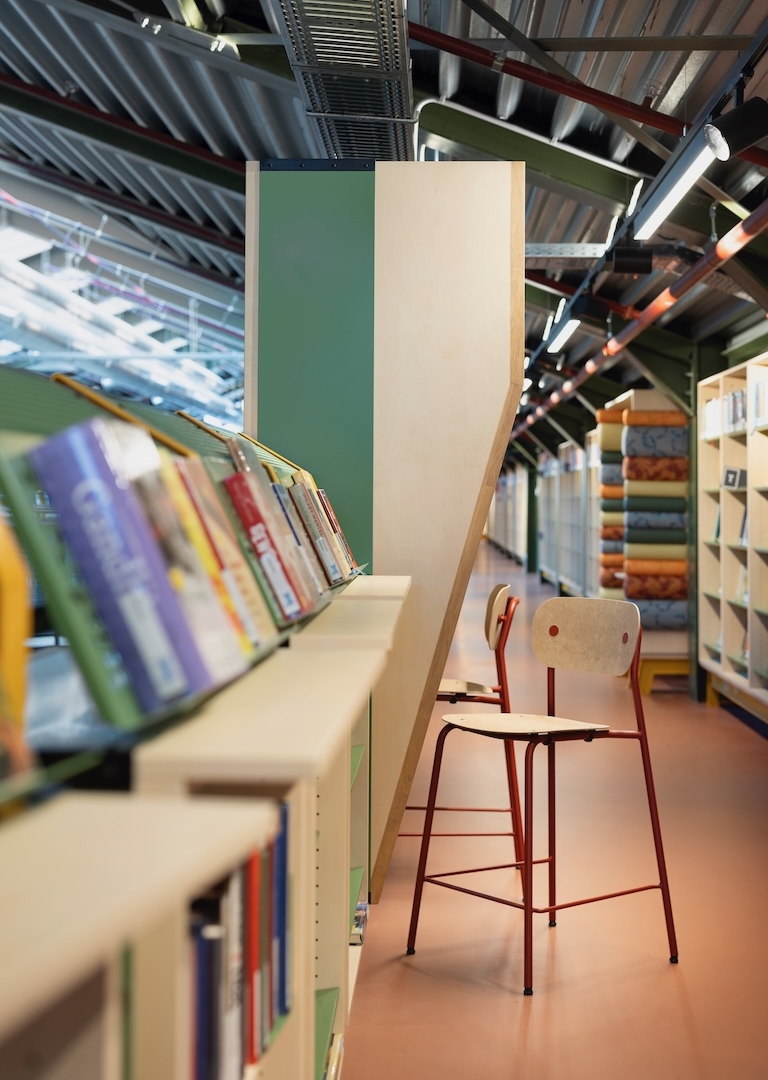
Variety in height, material and collection is a core theme
-
Discover our inclusive places